
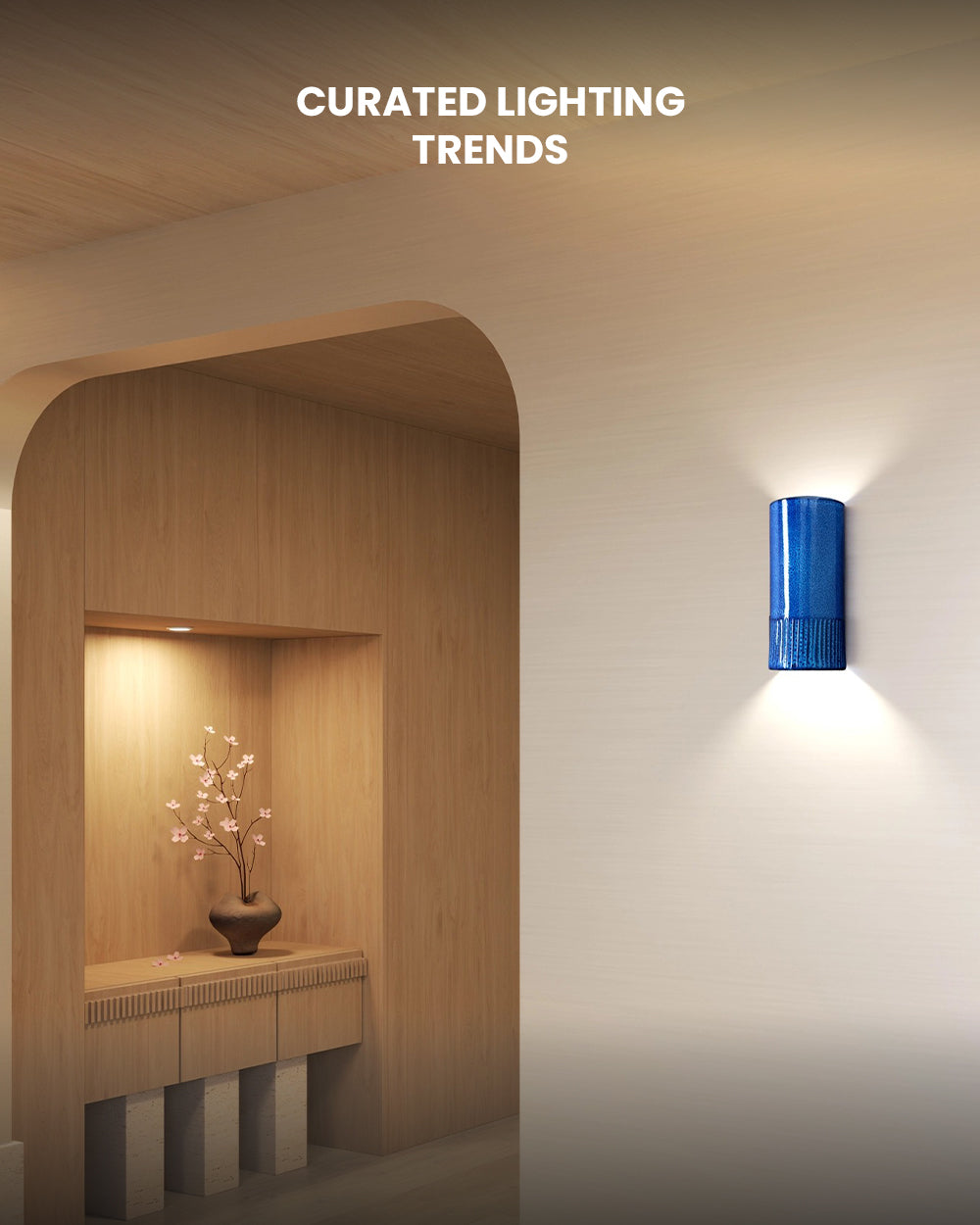
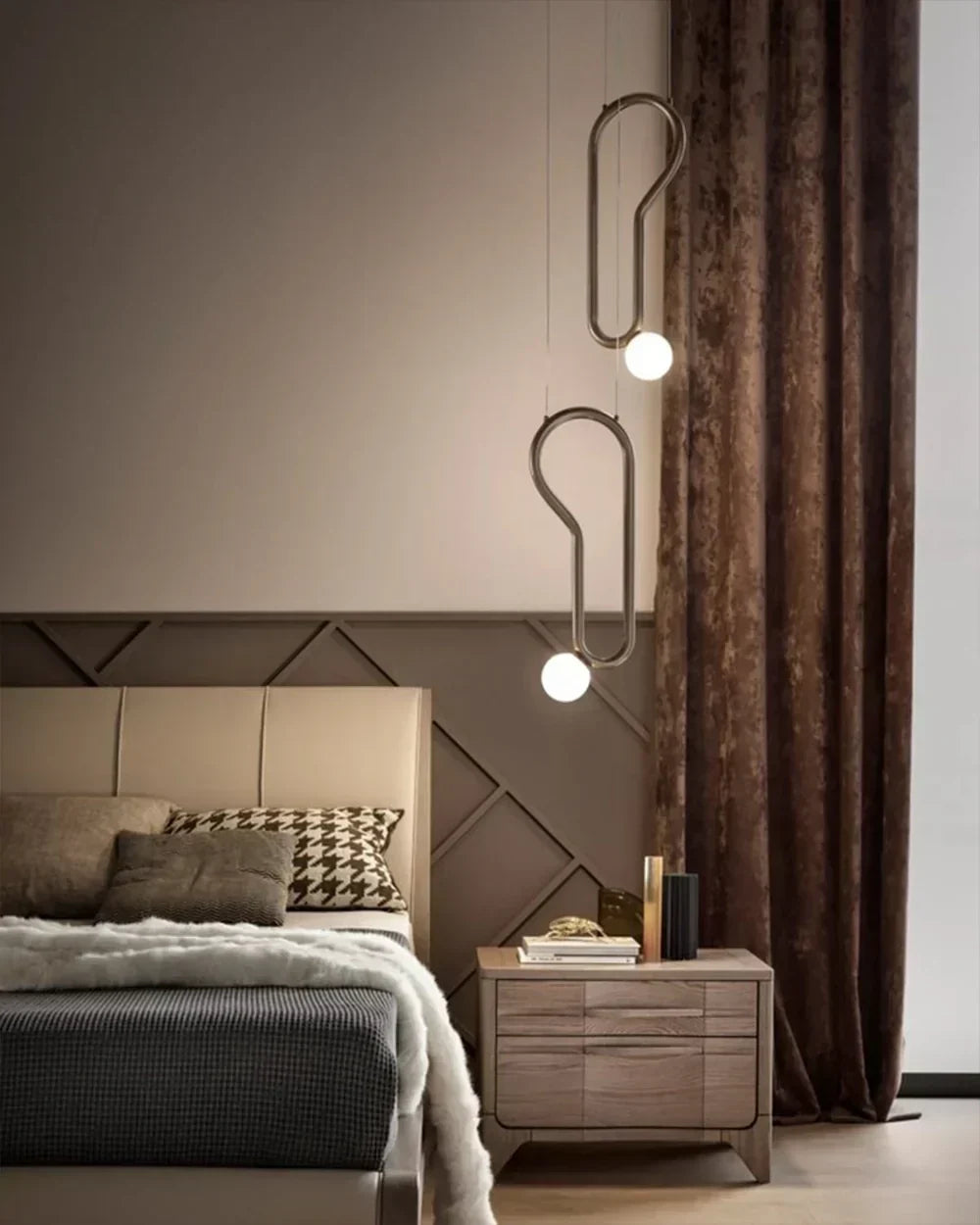
Walk into a hotel bar, a good restaurant, a lobby that gets the greeting right, and the lighting is doing something a home rarely bothers to do. It is layered. It is warm. It is dimmed to the hour rather than fixed to a switch. Nothing in a well-run venue relies on a single overhead source, because a single overhead source can only ever do one job - and hospitality spaces are built to hold a dozen different moods across a single evening.
This month we are borrowing that thinking room by room. Not by importing restaurant fittings wholesale, but by asking what each part of the house is really for, and lighting it the way a venue would light the equivalent space - the bar for lingering, the table for gathering, the lounge for settling in, the entry for the first impression. The rooms are domestic. The intention does not have to be.
What makes hospitality lighting feel different?
Three habits separate a venue from an average home. Light comes from several sources at different heights, not one ceiling point. Colour temperature sits low and warm - close to candlelight - because warm light reads as welcome, and cool light reads as a task in progress. And every layer answers to its own dimmer, because the room needs to change shape as the evening does. None of this is expensive to borrow. It is a way of thinking about a room before it is a shopping list.

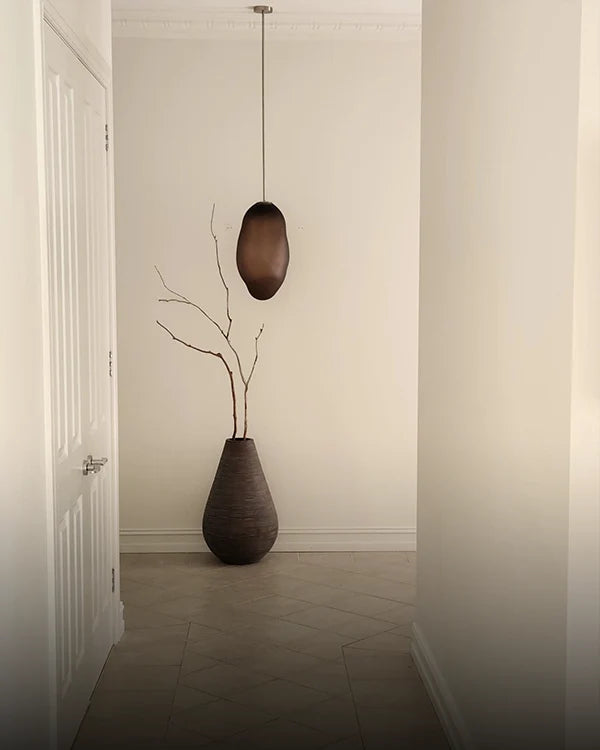
The entry: what does the first five seconds tell your guests.
A good venue makes its intention clear at the door - warm, considered and inviting. The entry sets the tone before a guest experiences anything else.
The Horizon II Pendant Light creates a refined architectural statement - ideal for defining an entrance without overwhelming the space.

For a more decorative arrival, the Stonington Pendant Light brings character and presence - creating a memorable focal point from the moment guests walk through the door.
 The right entry lighting does more than illuminate the way - it introduces the experience to come.
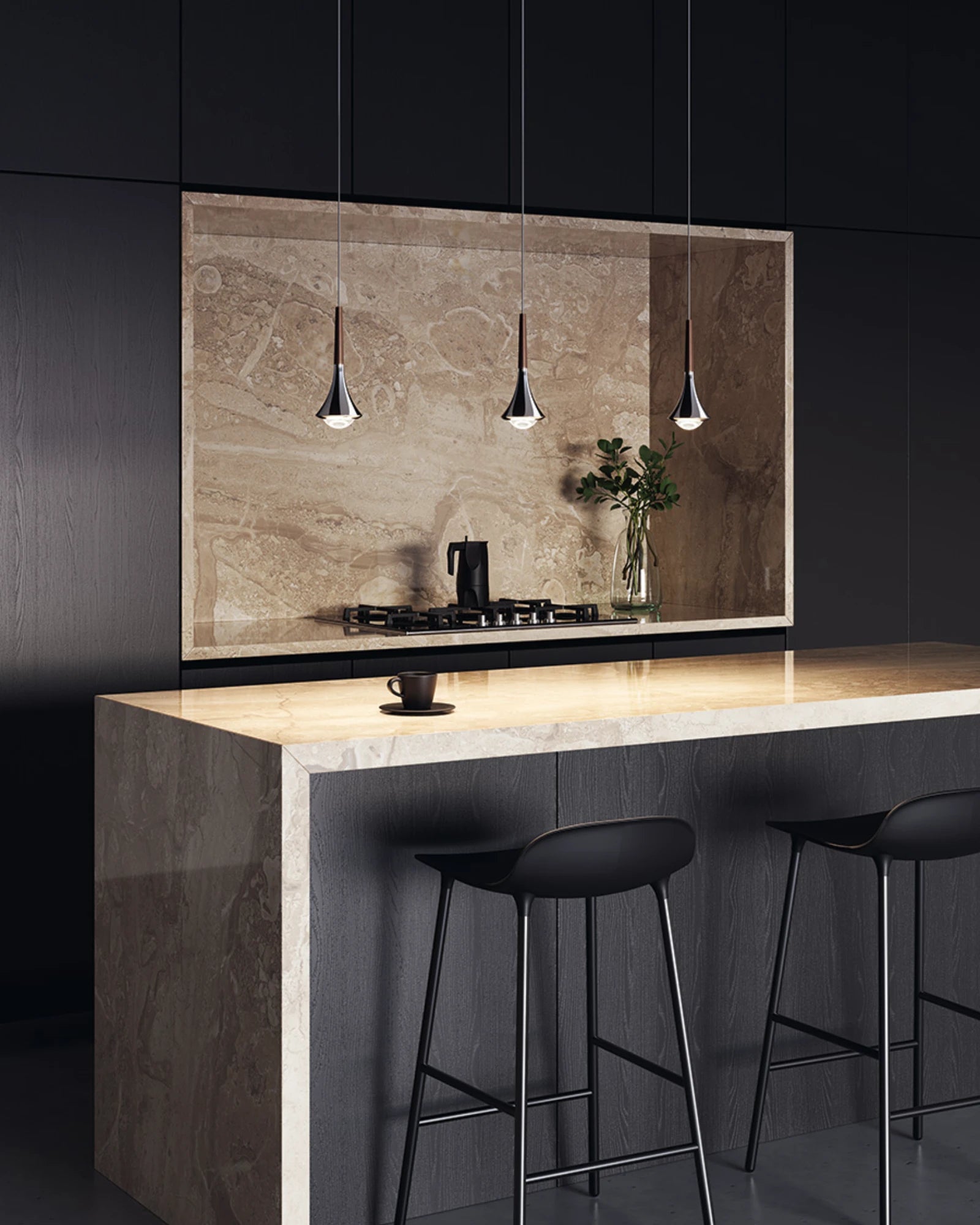
The bar nook: how do you light a corner worth lingering in?
A good bar nook does not need to announce itself with light. It warms the edges, highlights the glassware and creates a reason to stay for one more.
The Glass Drop Pendant Light brings a refined glass feature above a smaller bar area - creating a focal point without overwhelming the space.

Fairy Pendant Light offers a lighter, more delicate presence - ideal for adding atmosphere and a decorative glow.
 Tradition Linear Pendant Light creates rhythm across the surface - defining the nook while keeping the lighting considered and intimate.

And always make it dimmable - brighter for pouring, softer for lingering.
The dining table: how do you light a table that holds a whole evening?
A dining table needs to flatter the people sitting around it as much as the food in front of them. Warm, focused light from above defines the table as its own intimate zone without overwhelming the room.
The Groove 6LT Pendant Light creates a strong linear presence - ideal for illuminating a longer dining table while bringing structure to the space.
 The Blush 5LT Pendant Light offers a softer decorative statement - bringing warmth and character above the table.

For something more expressive, the Megafono 3LT Pendant Light adds sculptural form - turning the lighting itself into part of the dining experience.
 Keep the colour temperature warm - around 2700K - and always consider dimming. Dinner at 7pm and dinner at 10pm should not feel the same.
The lounge: how do you light a room built for staying in it?
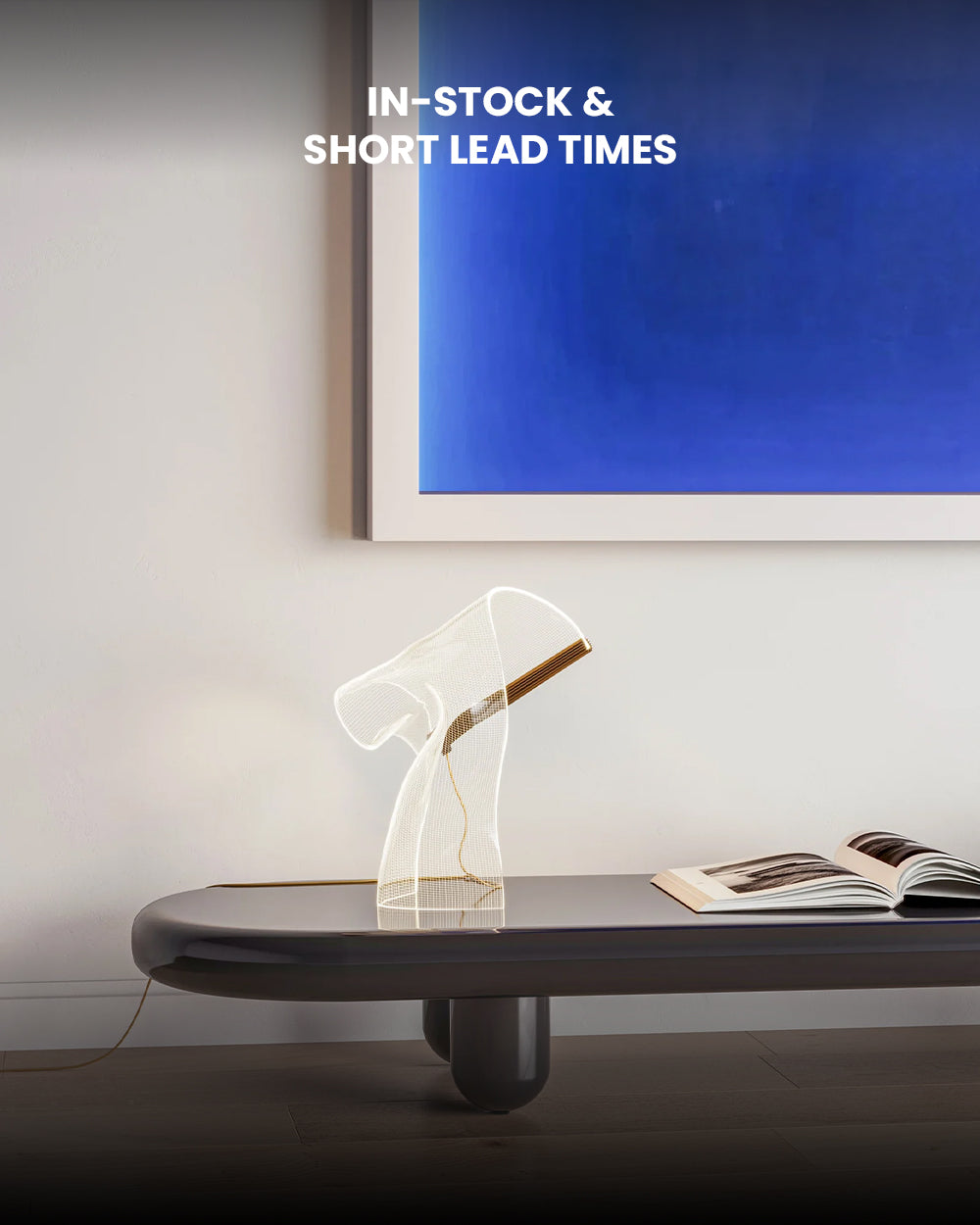
Restaurants and lobby lounges rarely light for reading. They light for company - creating low pools of warmth at seated eye level rather than relying on overhead light.
The In The Sun Table Lamp brings a warm decorative glow to side tables, while the Iota Table Lamp and Coral Table Lamp add sculptural character to smaller lounge settings.

Image: In the Sun Table Lamp, Coral Table Lamp & Iota Table Lamp
For another layer, the Birdy Swing Floor Lamp provides focused light beside seating, while the Totana Floor Lamp and Demi Moon Floor Lamp bring height, form and a softer ambient presence.

Image: Birdy Swing Floor Lamp, Totana Floor Lamp, and Demi Moon Floor Lamp
Keep overhead lighting low - a lounge should feel like somewhere to linger, not somewhere to wait.
The feeling, not the fit-out
None of this needs to look like a hotel to feel like one. The point of borrowing from hospitality lighting is not the polish - it is the ease. A room lit in layers, warmed to a soft 2700K, dimmed to the hour, is a room that asks nothing of you. You are not adjusting to it. It is holding you. That is what a good hotel room does the moment you walk in and exhale, and there is no reason a home has to wait for a holiday to feel it.
The scale is smaller. The feeling does not have to be.
Explore our full hospitality lighting collection for pendants, wall lights and lamps built for exactly this kind of warmth, or start with our pendant lighting collection to find the anchor piece for your own bar nook, dining table or lounge.