
What are the wall light trends for 2026?
The wall light trends defining 2026 are handmade ceramic, the softly glowing sphere, frosted glass and alabaster, wall lights in place of bedside lamps, and pieces that adapt to the hour. Each one is less about spectacle and more about how light feels on the skin at the end of the day.
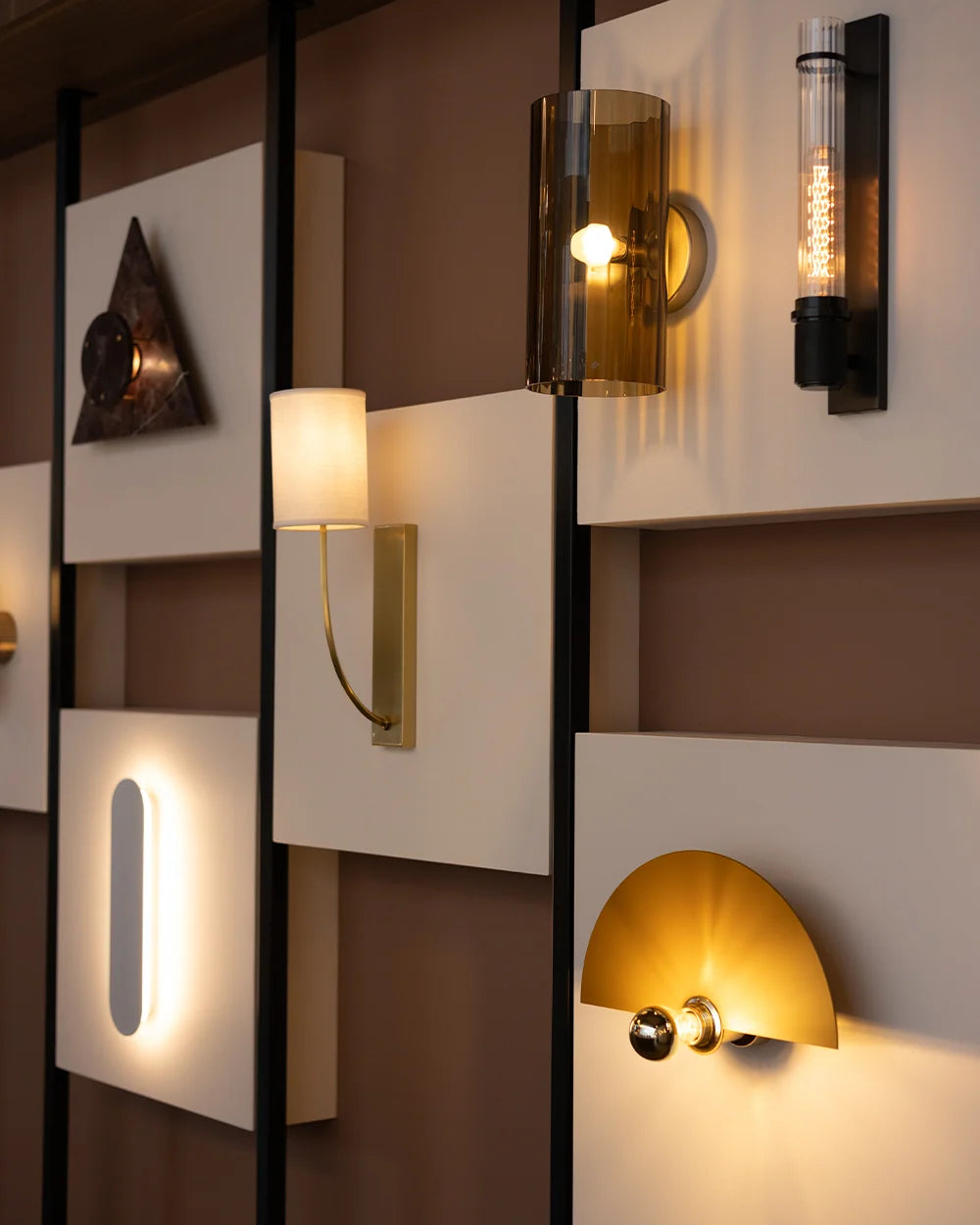
We can say this with some confidence, because it is what our clients have been choosing. Across the past year, the wall lights that have left our Surry Hills showroom in the greatest numbers share a quiet sensibility: rounded forms, tactile surfaces and a glow that is diffused rather than directed. The wall has stopped being somewhere to fix a fitting and become a place to hold light, gently, at eye level.
What follows is our reading of the moment, told through the pieces our clients keep returning to.
Why is handmade ceramic the defining wall light material of 2026?
Handmade ceramic leads because it brings the warmth and imperfection of the maker's hand to a room that might otherwise feel too finished. After years of polished metal and flawless glass, there is a real appetite for surfaces that show their making.
The Bowl Wall Light and its quieter sibling, the Dish Wall Light, are handmade in Melbourne, each fired at high temperature so that no two are quite alike. Their glazes read like an Australian landscape at rest: Saltbush, Olive, Rivergum, Sand, Stone. Set against a limewashed wall, the effect is less a light fitting than a small vessel holding a glow.

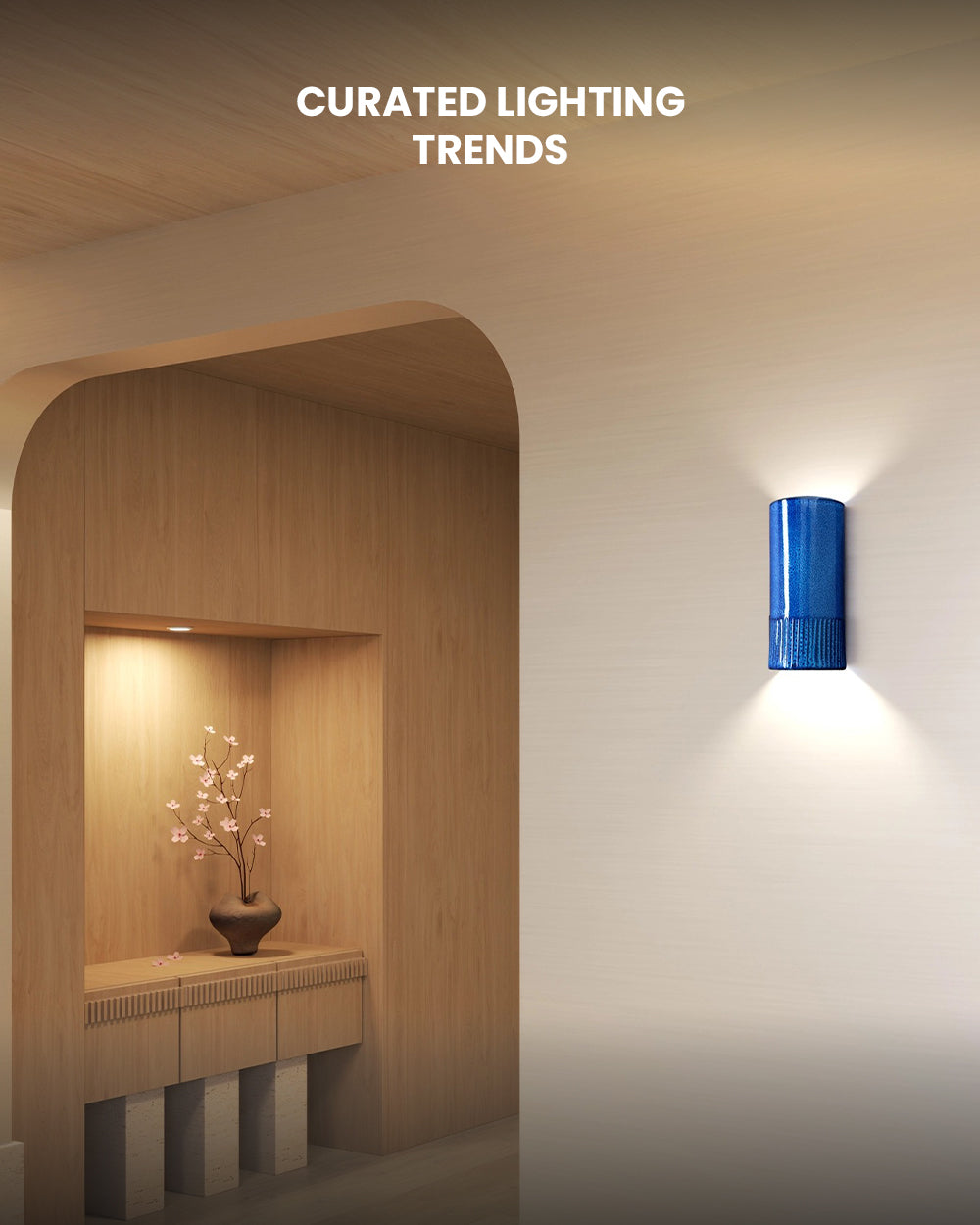
The Terra 2 Wall Light takes the material somewhere more architectural. Two ceramic cylinders meet at a slender metal ring, casting light both up and down, in glazes from fog to chartreuse. In pairs, it brings rhythm to a hallway or frames a bed with calm symmetry.

Is the globe wall light still in style?
Yes, the sphere remains one of the most enduring shapes in lighting, and in 2026 it is softer than ever. The appeal is simple: a globe of opal glass spreads light evenly in every direction, so a room is lit without a single hard edge.
The Orb Mirror Wall Light is the piece our clients choose most often. Its satin opal sphere sits on a slim arm in white, iron or old brass, and it moves easily between a bathroom vanity, a hallway and a reading corner. It is proof that the most loved designs are often the most restrained.

How do frosted glass and alabaster change the light in a room?
Frosted glass and alabaster turn a bright source into a gentle, ambient glow, which is why they suit the spaces where we want to slow down. They filter rather than display the light, and in doing so they lend it a softness that clear glass cannot.
The Gem Wall Light, in solid moulded glass, takes its asymmetric form from pebbles and gemstones, and in its frosted finish the light seems to come from within the material itself.

The Orli Alabaster Wall Light sets a glass globe against a curved alabaster backplate, where the stone's natural veining glows when lit; each piece is unique.

For a lighter touch, the Dome Air Wall Light pairs a frosted borosilicate dome with an old brass rod, producing a soft halo against the wall.

Can wall lights replace bedside lamps?
Yes, and it is one of the most practical shifts we see in renovations. Wall-mounted bedside lights free up the bedside table, keep cords out of sight and put the light exactly where you read.
The Fuse 3 Switched Wall Light is designed for precisely this. A switch sits on the wall plate within easy reach, and the head tilts and rotates to direct light onto the page before folding almost flat against the wall.

The Ascoli Single Switched Wall Light offers a more compact reading light with its own switch, suited to tighter bedheads and guest rooms.

Why are adaptable wall lights on the rise?
Adaptable wall lights are rising because a single room now does many jobs, from morning routine to evening wind-down, and the light needs to change with it. Clients increasingly ask for pieces that can shift in mood without a second fitting.
The Loop Fusion Wall Light answers that brief. It mounts to the wall or ceiling, and a switch moves its light between warm, neutral and cooler white, with a dimmable driver for the softest evening setting. Its decorative ring comes in finishes from brushed brass to dark bronze, so it can sit quietly or catch the eye. It is also available in an amber version for a warmer, more distinctive look.

A few finer points
On colour temperature. Warm white, around 2700K to 3000K, is the quiet constant behind every trend here. It flatters ceramic glazes, deepens alabaster and makes frosted glass glow rather than glare.
On height. In living spaces and hallways, wall lights usually sit a little above eye level so the source stays out of sight. Bedside reading lights sit lower, roughly at shoulder height when you are sitting up in bed, so the light falls onto the page.
On bathrooms. If a wall light is headed for the bathroom, look for an IP44 rating or higher. Several pieces in this edit, including the Dish, Terra 2, Dome Air and Loop Fusion, carry that rating.
On handmade variation. Handmade ceramic and natural alabaster vary from piece to piece in tone and texture. That variation is the point, and it is worth seeing in person before you choose a finish.
On installation. In Australia, a mains-powered wall light must be installed by a licensed electrician, so plan bedside and feature wall lights early in a build or renovation.
Find your light
Whether you are drawn to the earthy calm of handmade ceramic, the pure geometry of the sphere or the hush of frosted glass, the wall is where these trends come to life. Explore our wall lights collection, or book a design consultation and see these pieces in person at The Nook Showroom in Surry Hills.
The most beautiful light is the kind you feel before you notice it.