
How Restaurants, Bars and Hotels Create Atmosphere With Light
There's a reason we often remember certain restaurants long after we have forgotten what we ate. It is rarely the chairs... It is almost never the menu typeface. More often than not, it is the light - the warm pool over the table, the glow behind the bar, the lantern by the door that made the entrance feel like an invitation, rather than an entry point.
Hospitality lighting is its own discipline. A home needs light to serve one household. A venue asks it to perform for hundreds of strangers a night, across breakfast service and last drinks, in a room that has to feel effortless while working very hard. When we consult on hospitality projects from our Surry Hills showroom, the brief is nearly always the same underneath the details: we need lighting that makes people want to stay.
This guide walks through how light shapes each moment of the hospitality experience - arrival, dining, the bar, the guest room, the terrace - and the pieces from our collection we return to again and again.
The arrival: light as first impression
Hoteliers have understood this for over a century. The grand lobbies of the early 1900s were built around chandeliers because a guest’s first thirty seconds set the tone for the entire stay. The scale may have softened, but the principle remains - the entrance is where a hotel makes the most impact.
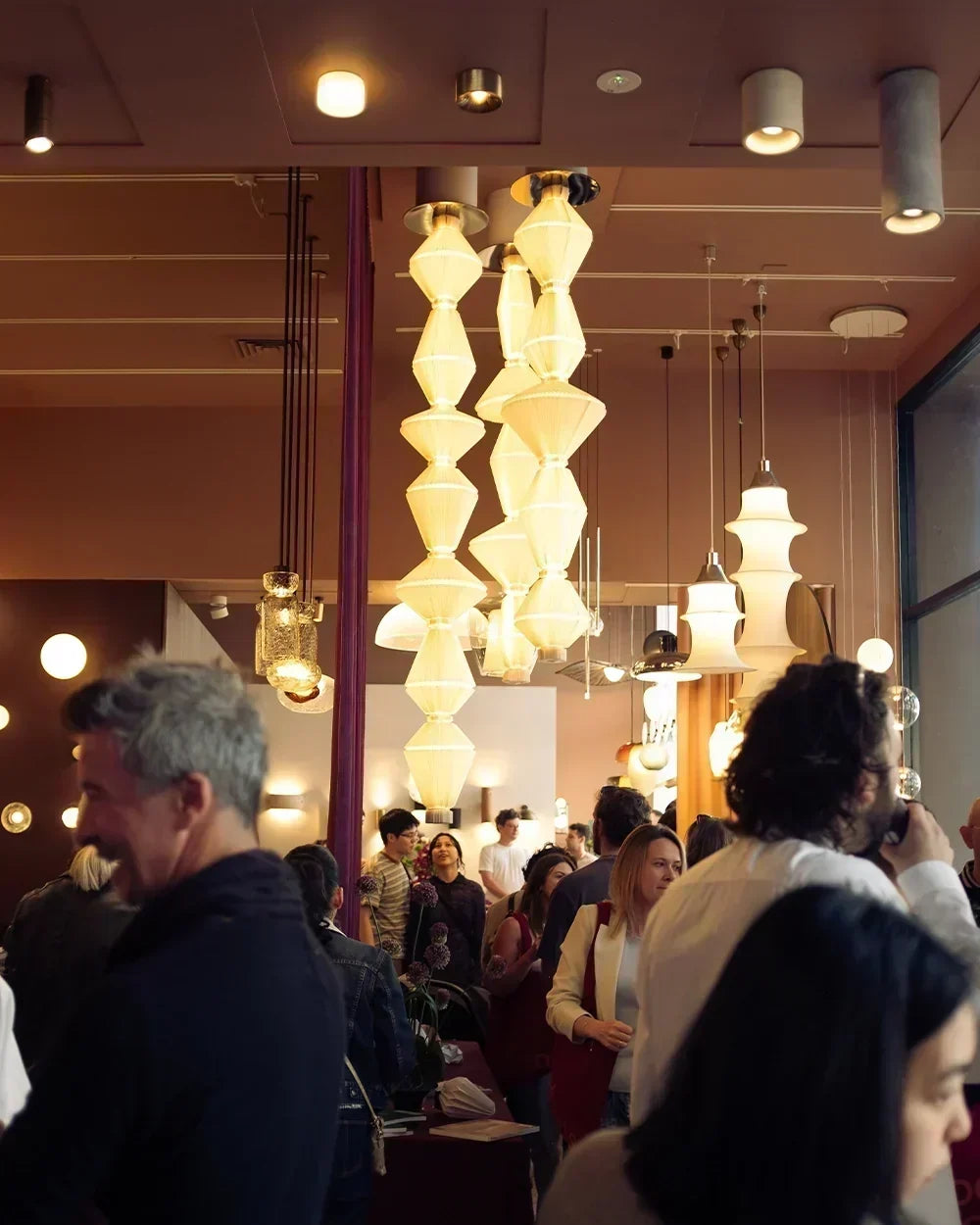
The most effective arrival lighting is sculptural without being loud. A statement pendant or chandelier can establish the mood before a guest reaches reception.
The Puppet Round Pendant Light brings together multiple glass forms to create an expressive centrepiece - particularly effective in generous lobby spaces.

The Cage Pendant Light offers a stronger architectural presence - adding structure and visual impact above an entrance or reception zone.

For large spaces that need a light to scale with, the Nappe XL Pendant Light creates an immediate focal point. The La Lampe C Chandelier and Santa Fe Chandelier bring the drama and presence to lobby spaces.


For a more contemporary expression, the Roma Pendant Light and Levante Pendant Light introduce sculptural form while keeping the overall atmosphere sophisticated.

The goal is not simply to illuminate the lobby - it is to create a first impression guests that threads the entire experience at the hotel.
The dining room: warmth over brightness
Hotel dining rooms need lighting that feels welcoming by day and atmospheric by night. Layering decorative pendants with softer ambient light creates warmth, intimacy and visual interest.
The To-Be Pendant Light brings a clean, contemporary presence above dining tables understated enough to repeat throughout a space while still adding character.

The Mos Pendant Light introduces a more decorative element - ideal above larger tables or as a focal point within the dining room.
The Billa Pendant Light offers a softer, refined presence - adding elegance without overwhelming the interior.

Layer pendants with the Nautilus Wall Light - a sculptural wall light that adds depth and a softer glow to walls, banquettes and intimate corners.

Always consider dimming from day one - allowing the dining room to transition seamlessly from morning service to a warm, intimate evening setting.
The bar: shadow is the point
Bars invert the usual lighting logic. The brightest moment is often behind or above the counter - bottles glow, the bartender’s hands are visible, while the surrounding space is allowed to fall into shadow. It is stagecraft, and the best bars treat it that way.
The Flask Pendant Light brings glass and light together in a refined form - ideal for creating an intimate glow above a bar.

For longer counters, the Tradition Linear Pendant Light creates rhythm and definition – drawing the eye along the length of the bar without flooding the room with light.

The Nabila 9lt Pendant Light adds a more decorative presence - bringing warmth, character and a sense of occasion to the space.

The aim is contrast - enough light to make the bar the focal point, with enough shadow around it to create atmosphere.
The table itself: the portable revolution
The most significant shift in hospitality lighting over the past few years has happened at table level. Rechargeable, cordless lamps have quietly replaced the candle - all of the intimacy, none of the wax, and a venue can rearrange its floor plan nightly without an electrician.
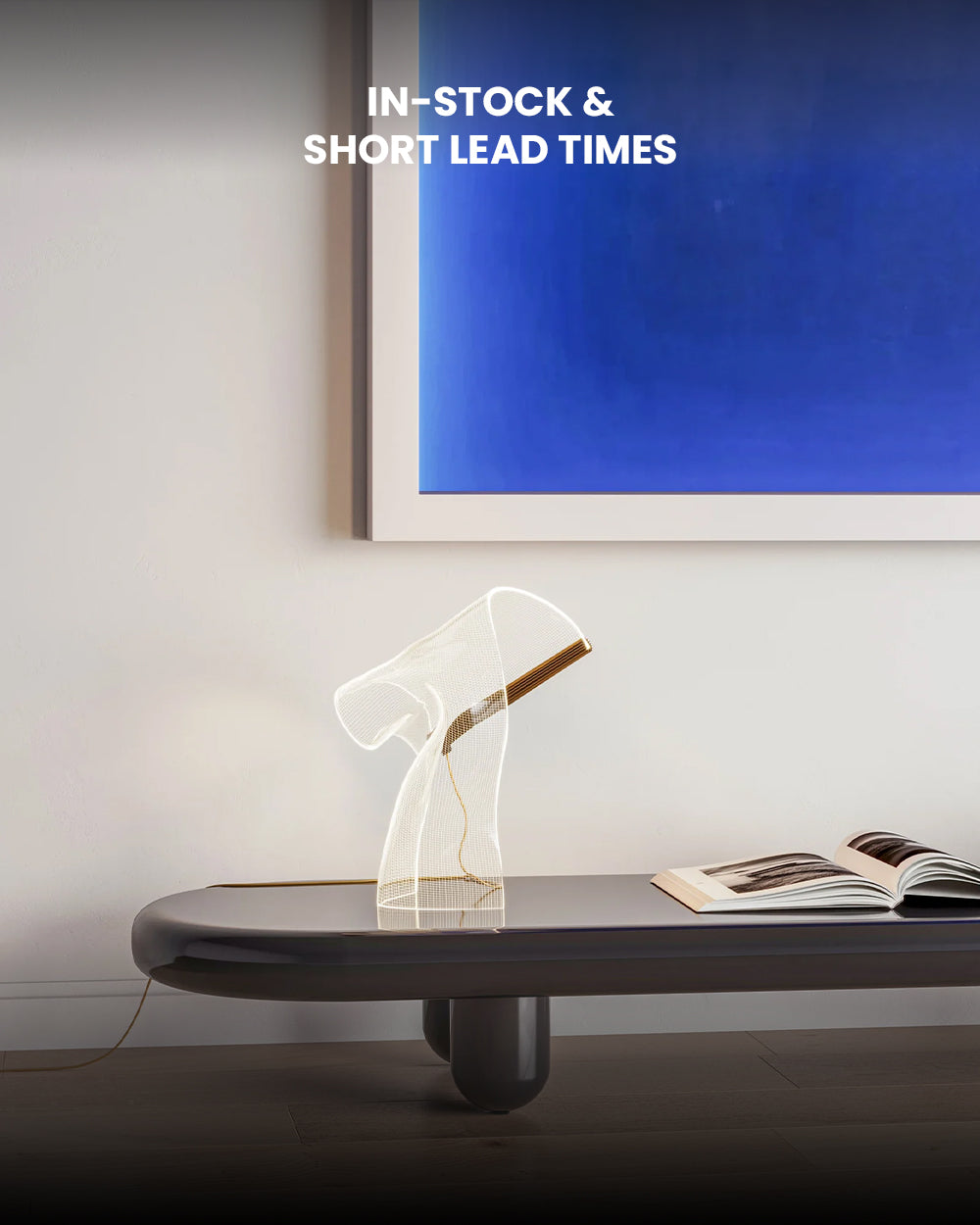
The Nomad Portable Table Lamp by Astro was designed with hospitality in mind - water-resistant, dimmable, equally at home inside or out.

The Hashira Portable by Audo Copenhagen draws on Japanese paper lanterns, its textile shade diffusing a soft 360-degree glow with up to ten hours on a charge - a full service, comfortably.

The terrace: extending the evening outdoors
Australian hospitality lives outdoors for half the year, and the terrace deserves the same care as the dining room. The mistake is floodlighting - nothing empties a courtyard faster. The better approach is low, layered and portable: light where people sit, darkness where they do not.
The Kuro Portable Lamp by Astro was made for the hotel terrace - solar-powered and rechargeable, with a hidden LED that directs light downward and eliminates glare. Our broader outdoor lighting collection covers the structural layer - IP-rated wall lights, bollards and pendants designed for Australian conditions - so the fixed and the movable can work together.

The bathroom: the room guests judge in private
Ask any hotelier where guest reviews are won and lost, and the bathroom comes up quickly. And in restaurants, the powder room has become something of a design signature - the small, jewel-box space where a venue can be more theatrical than the dining floor allows. Guests notice, photograph and talk about it.
The technical brief comes first here. Anything near water needs the right IP rating - IP44 or higher is the working standard for fittings within reach of a basin, bath or shower, and Australian regulations divide the bathroom into zones that dictate what can go where. It sounds restrictive. In practice, the constraint has produced some genuinely beautiful fittings.
At the vanity, the goal is flattering, even light on the face - which means lighting beside or around the mirror rather than a single downlight above it, which casts shadows nobody wants at 7am. The Io Bathroom Wall Light is a refined answer - sleek, IP44-rated, dimmable, and available in matte black, matte gold or polished chrome to pick up a venue's tapware.
The Bari Wall Light does similar work in a softer register, its opal glass shade throwing bright, even light without glare.

For the powder room, character is the point. The Plume Bathroom Wall Light by DCW Editions - inspired by the form of a feather, with an adjustable porcelain or polycarbonate shade - is exactly the kind of piece that turns a small room into a talking point.

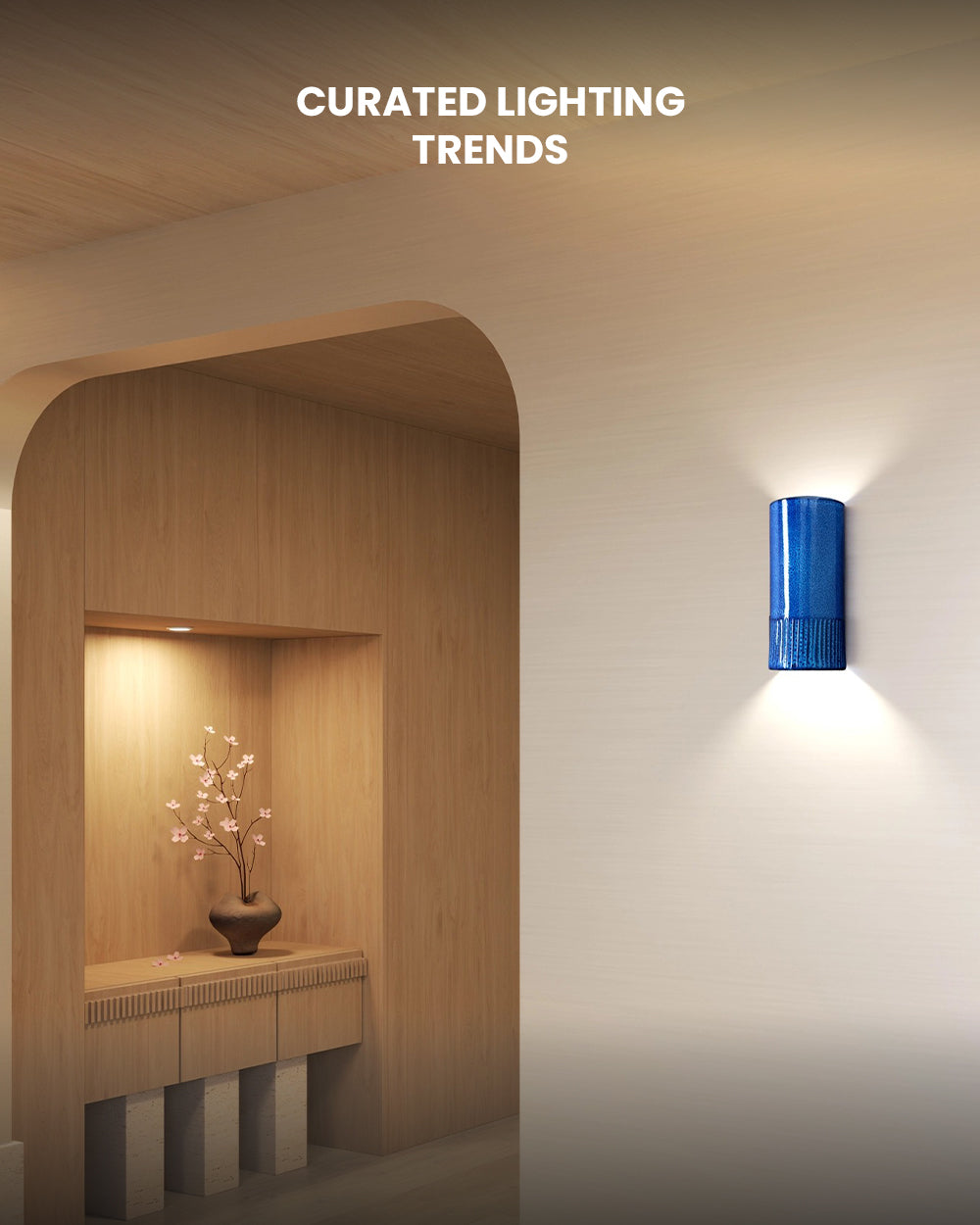
Karman's Agua Wall Light, in mouthblown glass with a soft halo glow, works singly or in composition, and its IP44 rating extends it to covered outdoor areas too.

Our full bathroom lighting collection covers vanity, ambient and pendant options, all IP-rated for wet areas.
The layering principle
If there is one idea that ties all of this together, it is layering. No hospitality space works on a single light source. The rooms that feel effortless are running three layers at once - ambient light holding the space, task light where work happens, and accent light giving the eye somewhere to rest. The proportions shift through the day, which is why dimming is not an upgrade but the foundation.
It is also why we always suggest thinking about hospitality lighting as a composition rather than a shopping list. A lantern at the door, glass pendants over the tables, a glow behind the bar, a small lamp in every guest's hands on the terrace - each piece is doing a different job, and the atmosphere lives in the space between them.
Our luxury lighting Collection began life under the name "Hotel in the Home" for a reason - the best hospitality lighting is simply good lighting, held to a higher standard of endurance. If you are planning a venue, a fit-out or a refresh, our team works with trade clients at every stage, from concept to specification. Visit us in Surry Hills, or explore the full indoor pendant collection online.