
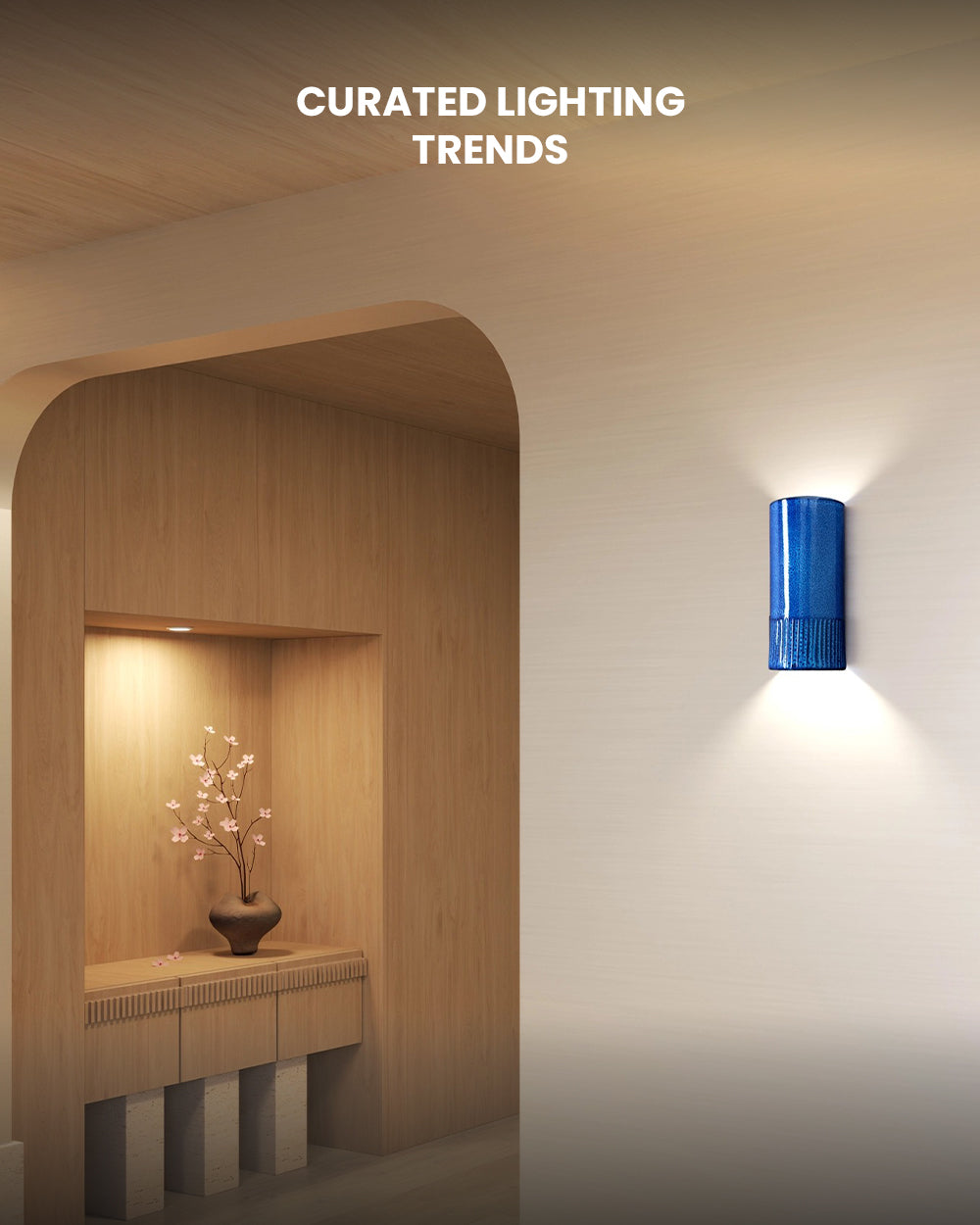
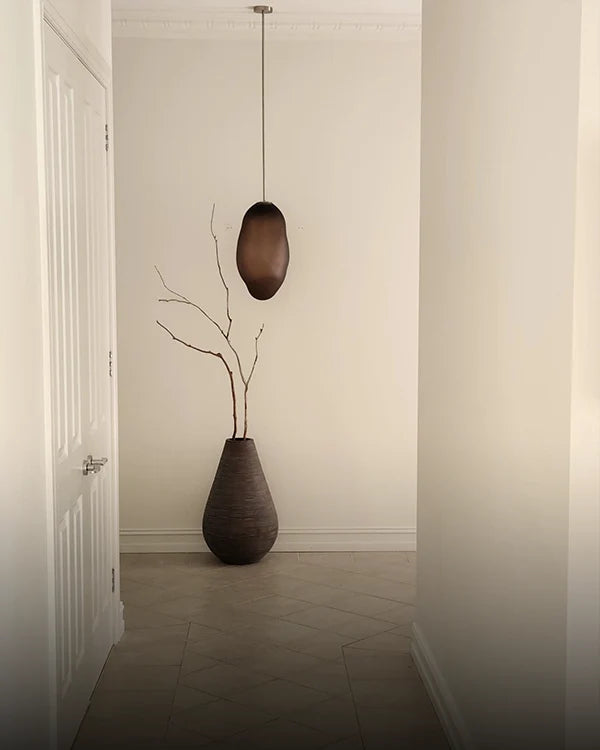
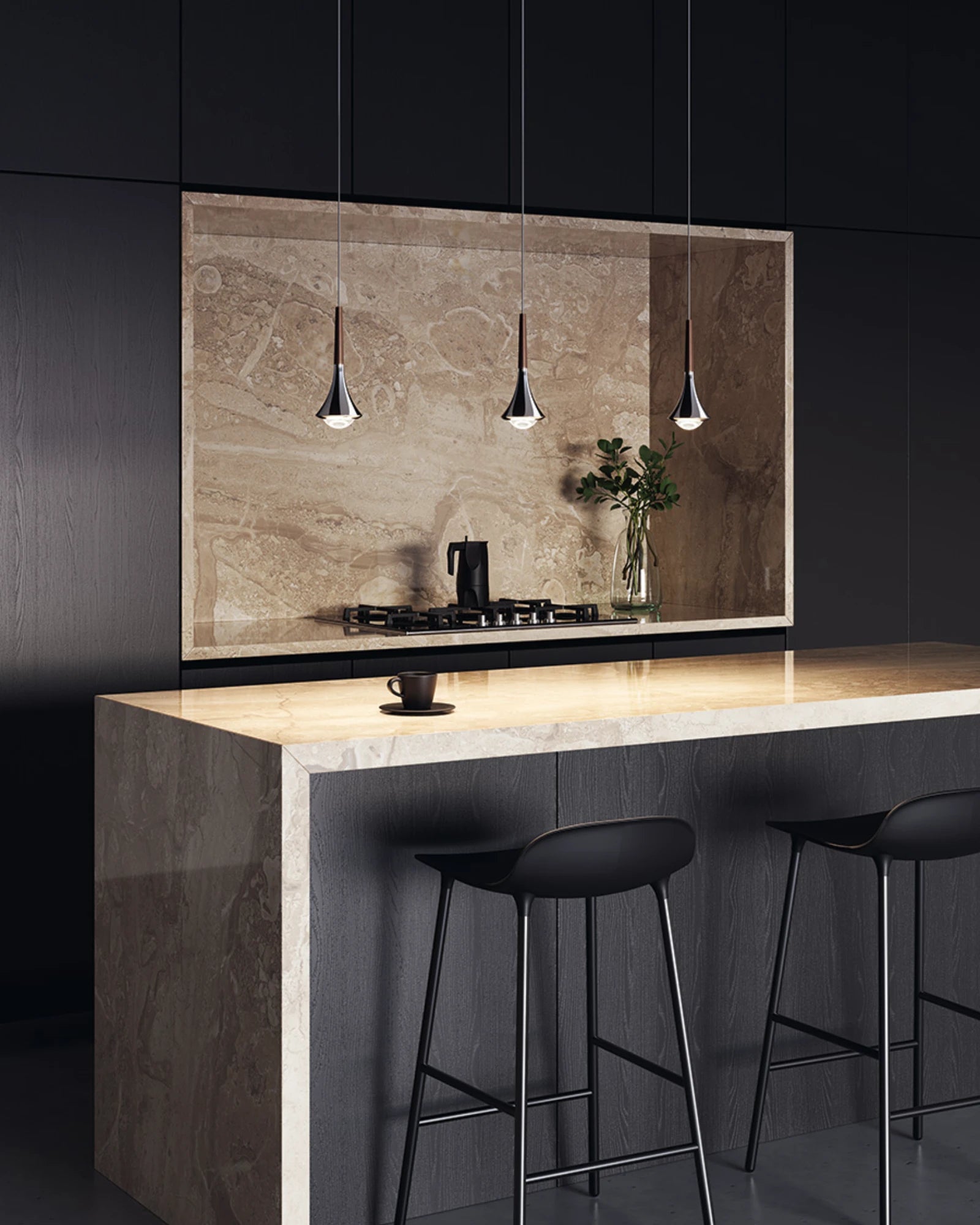
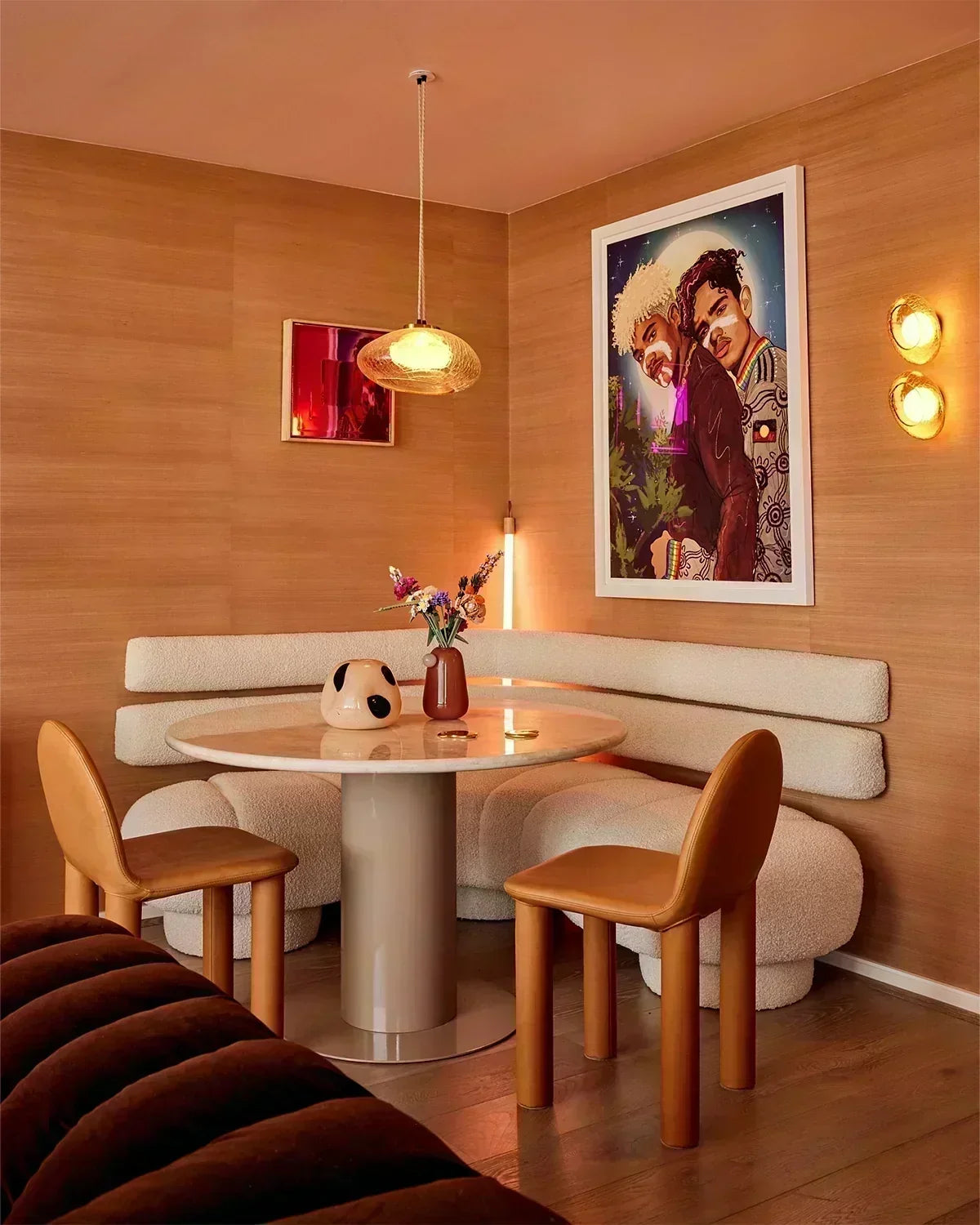
The right lighting can encourage lingering at the dining table, long after the plates are cleared. It's rarely a single source of light - it's often an overhead light with glass that scatters light, ceramic that holds a glow, or steel that provides the room with a spotlight. It can also be atmospheric; a dining room with a welcoming lamp glow from a sideboard or buffet, or a wall light that spills light without glare.
Before we had switches and dimmers, the dining table was lit from it's centre by either tallow, wax, or gas. A candle lit dinner does not just allow for light closer to the food, but it sets the mood of the meal. Light from the table gathers guests around the centre.
So, in modern times, how do you replicate the right dining room lighting? Beyond the candle, there are a wealth of ways to style your dining room lighting to set the mood.
Dining room lighting style guide
Hand-blown glass in the dining room
There is a version of glass that comes off a production line, perfectly uniform, and there is a version that comes off a glassblower's pipe, carrying every breath and turn in its surface - bubbles suspended mid-form, a slight asymmetry no mould could replicate.
The second kind, hand-blown glass, is our favourite type of glass fixture to hang over a dining room table. Light moves through hand-blown glass unevenly, scattering rather than beaming. The best hand-blown pieces are made this way deliberately, often in small runs or soft colourways, so no two are ever quite alike. Hang it low, let it sit close to the table, and the whole evening takes on the same slightly imperfect warmth as the glass itself.

Circus Pendant Light & Cherry Pendant Light

Ceramic dining lighting
Where blown glass alone can still feel a touch theatrical, pairing the dining room with a ceramic body brings the light down to something quieter - softer, more diffused, closer to candlelight. The result is less of a light fitting, and more as an object that happens to glow.
Ceramic-and-glass pendants are also built for repetition - three or four pendants strung down a long table read is like a constellation, each one catching the light slightly differently depending on where a guest is sitting.

Fiori Di Pizzo 3lt Pendant Light & Swirl Cone Pendant Light
Is steel too industrial for a dining room?
Steel does not need to be cold - it can come off as considered engineering and can bring confidence to your dining room styling.
A steel-caged pendant is a thoughtful way to add more structure to the dining room, providing more personality and masculinity to the space without overpowering the interiors. Used well, steel does not compete with warmth. It simply frames the interiors differently.

Formation Lux Pendant Light & Dea Pendant Light
Choosing a pendant shape
Lighting material can decide the mood, shape of the pendant can determine whether the fitting fits the table it hangs above. If you're choosing a dining room pendant, consider the table's own geometry.
A single round pendant works best over a round or square table, where it can sit centred and let its glow spread evenly in every direction - hung over a long rectangular table instead, it tends to pool light in the middle and leave both ends looking slightly abandoned.

Kelly Dome Pendant Light & Calo Pendant Light
A linear or multi-pendant light solves exactly that problem, running the light out along the table's length rather than concentrating it in one spot, which is why it is more suited for longer dining tables.

Megafono 3lt Pendant Light & Mono Pendant Light
And a cluster of two or three smaller pendants, hung at slightly varied heights or spaced along the table, gives a room something a single fitting cannot - rhythm, and the sense that the lighting was composed.

Coral Duo Dome Pendant Light & Folie 2 Tier Pendant Light
As a general styling rule: let the pendant's shape match the table.
Three dining lighting styles worth knowing
Sculptural. Built around form and texture as much as function - hand-blown glass, ceramic, organic silhouettes that catch the light differently depending on where you are sitting. Sculptural lighting suits dining rooms that want to feel gathered and unhurried, pairing naturally with timber tables and tactile, layered settings.

Link Large Pendant Light & Bloc Vertical Pendant Light
Scandinavian. Pared-back fixtures, natural materials and warmth over anything ornate. Scandinavian is more than minimal, it's considered styling. Scandinavian lighting suits dining rooms built on restraint and craft, with light timber and soft textiles.

Tradition Pendant Light & Strap Pendant Light
Coastal. Lighter and even more textural, coastal lighting can be bleached or natural timber, woven and textile diffusers, matte finishes that provide a relaxed interior. It suits dining rooms leaning into an easy, indoor-outdoor identity, and works as comfortably inland as it does by the water.

Totana Pendant Light & Moby Dick Pendant Light
Open-plan or separate dining room - does it change the lighting?
In a defined dining room, the pendant's main job is to light the table. In an open-plan layout, it takes on a second role as well - it needs to visually mark the dining zone as its own space within a larger area. This tends to favour a pendant with a little more presence, or a pendant hung lower than a separate dining room would need, as the fitting is both providing light and a spatial divider.

Hashira Pendant Light & Mei Pendant Light
A defined dining room has more room to be subtle, because the architecture is already doing the work of marking the space out. The pendant there is free to simply offer light.

Pit Max Pendant Light & Ali E Baba Pendant Light
The table that is used for more than formal dining
For many households, the dining table is host to meals at night, a laptop by day, and family gatherings during breakfast. It's the same setting that needs to provide multiple purposes, and needs to be functional to do so. This is the strongest argument for choosing a pendant with more range, rather than one styled for a small slither of light.
A light capable of moving from a bright, considered daytime presence through to something low and atmospheric by evening is the ideal solution. Where possible, opt for a wide dimming range to allow for a smooth transition.
 Nooi Linear Pendant Light & Bloom Pendant Light
 Lampe de Marseille Wall Light & Officina Drum Pendant Light
Do you need more than a pendant over a dining table?
The pendant is designed to light the table, not necessarily the space around it. If you've just got one overhead fitting, the space can feel unfinished.
A pair of wall lights either side of a sideboard, or a single sculptural piece on a console within the room can go a long way in both form and function.
 Puddle Stone Wall Light & Sonn Wall Light

For dining rooms with the scale and ceiling height to carry it, a chandelier or multi-arm fitting can take the place of the pendant entirely, providing intimacy.

Dussa Chandelier & Novecento Pendant Light

What colour temperature is best for a dining room?
Whichever material ends up above the table - blown glass, ceramic, steel, or something bigger and more theatrical again - colour temperature should stay close to 2700K throughout. This is the warm end of the white light spectrum, close to candlelight, and it is what allows food and faces to both look their best in the same room. A cooler, bluer light does the opposite.
And every fitting should be dimmable, to be able to set the mood.