
As the warmer months arrive, life moves outside. Dinner runs past sunset on the balcony. A long afternoon by the pool turns into evening drinks. The garden becomes an extension of the home; for both adults and kids. As we move to long, lingering nights outside, intentional lighting is key.
There are a couple of light fittings that do the bulk of the work: the pendant, which anchors a table or a seated area for entertainment, and the wall light, which covers areas beside a door, along a wall, or flanking stairs. There are other types of lights that work just as well outdoors as they do inside - it's all about making your outdoor or alfresco lighting considered.
Styling guide for alfresco lighting
How to make outdoor lighting feel considered rather than functional
The styling considerations that matter indoors matter outside too, adapted for the elements.
Light should come from more than one source and more than one height - a pendant overhead, a wall light at eye level, something lower again along an edge or a step - rather than a single fixture doing all the work.
Colour temperature should stay warm, close to candlelight. A cool white comes off as security lighting, rather than a warm night of entertaining.
Ideally, every fitting should sit on its own dimmer or switch, so a space can hold a bright, functional glow early in the evening and something lower and slower once the night settles in.
And finally, the one requirement outdoor spaces carry that indoor rooms do not: everything has to be genuinely built for the weather, with an IP rating.
What's the best outdoor lighting for a balcony?
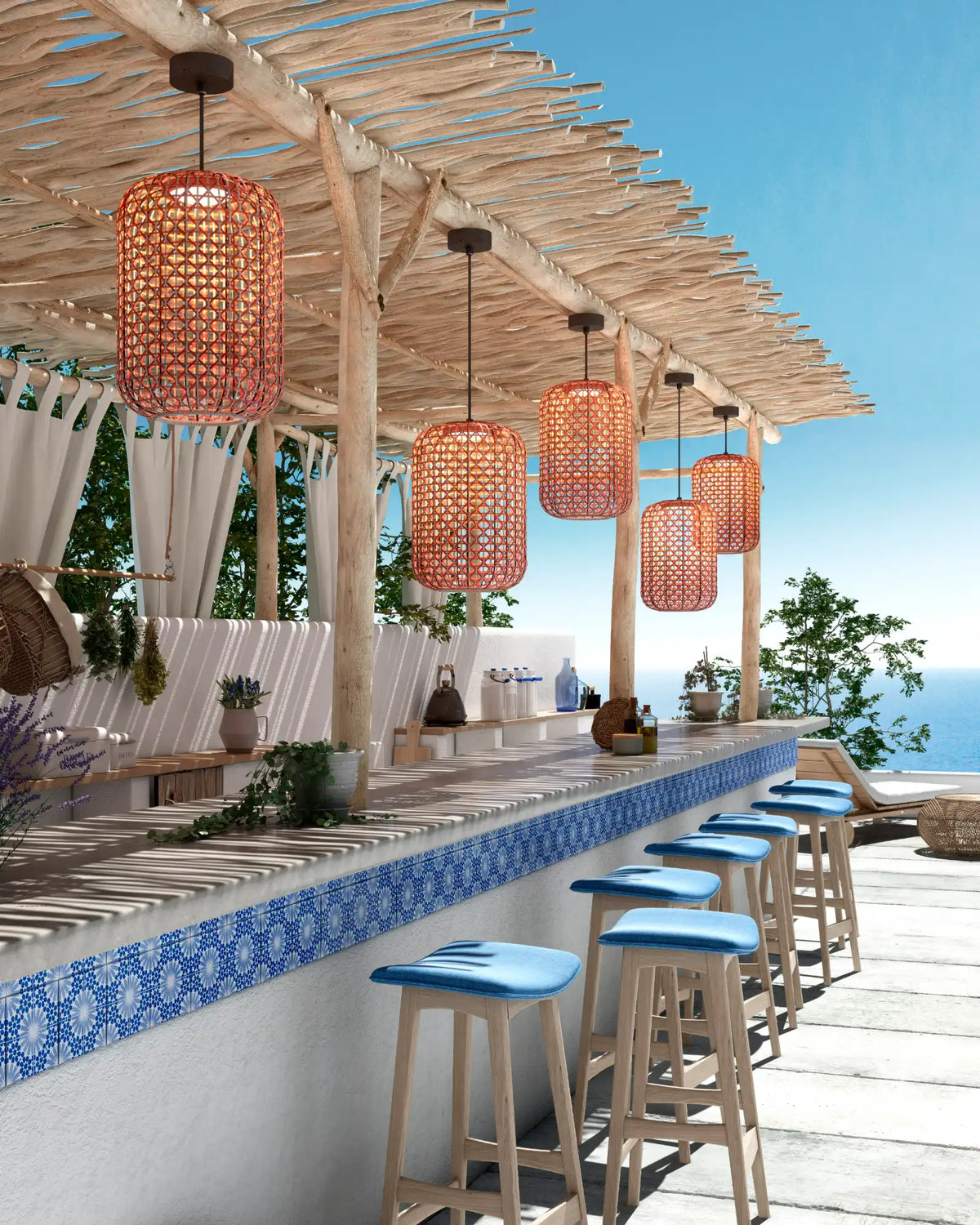
A balcony rarely has room for more than one or two fittings, which means that you need to choose wisely. A compact outdoor pendant, hung where the seating area is rather than centred for the sake of symmetry, gives a narrow balcony a nice anchor point.

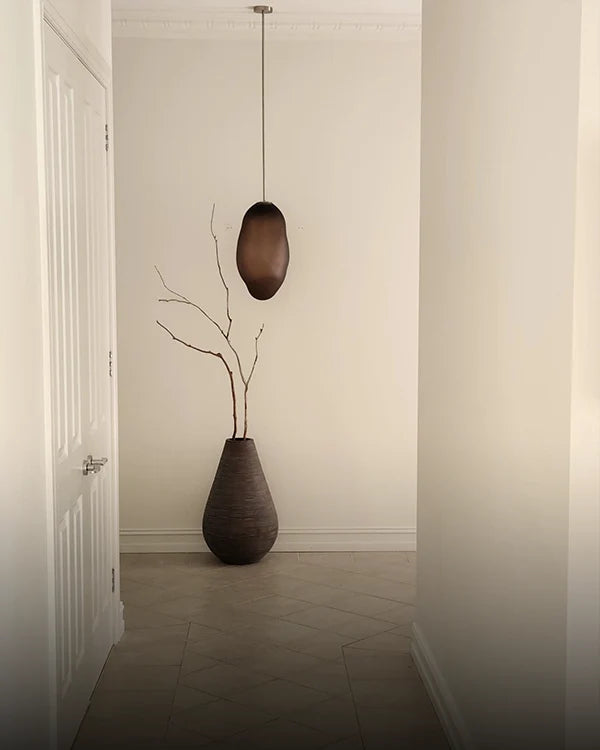
Image: Moby Dick Outdoor Pendant Light & Grande Costanza Outdoor Pendant Light
If there is no ceiling fixing point to use, a weatherproof wall light does the same job from the side - mounted beside the door or along the balustrade wall, it provides ambient light without needing an electrician to run new wiring overhead.

Image: Flo Outdoor Wall Light & Cone Outdoor Wall Light
A portable lamp on the table or ledge adds a second, softer layer. Even a narrow balcony feels more styled once there is warmth at more than one height - that's is the difference between a space lit for function, and one that has been styled.

Image: Olivia Table Lamp & Lorosae Table Lamp
How should you light a pool area for entertaining?
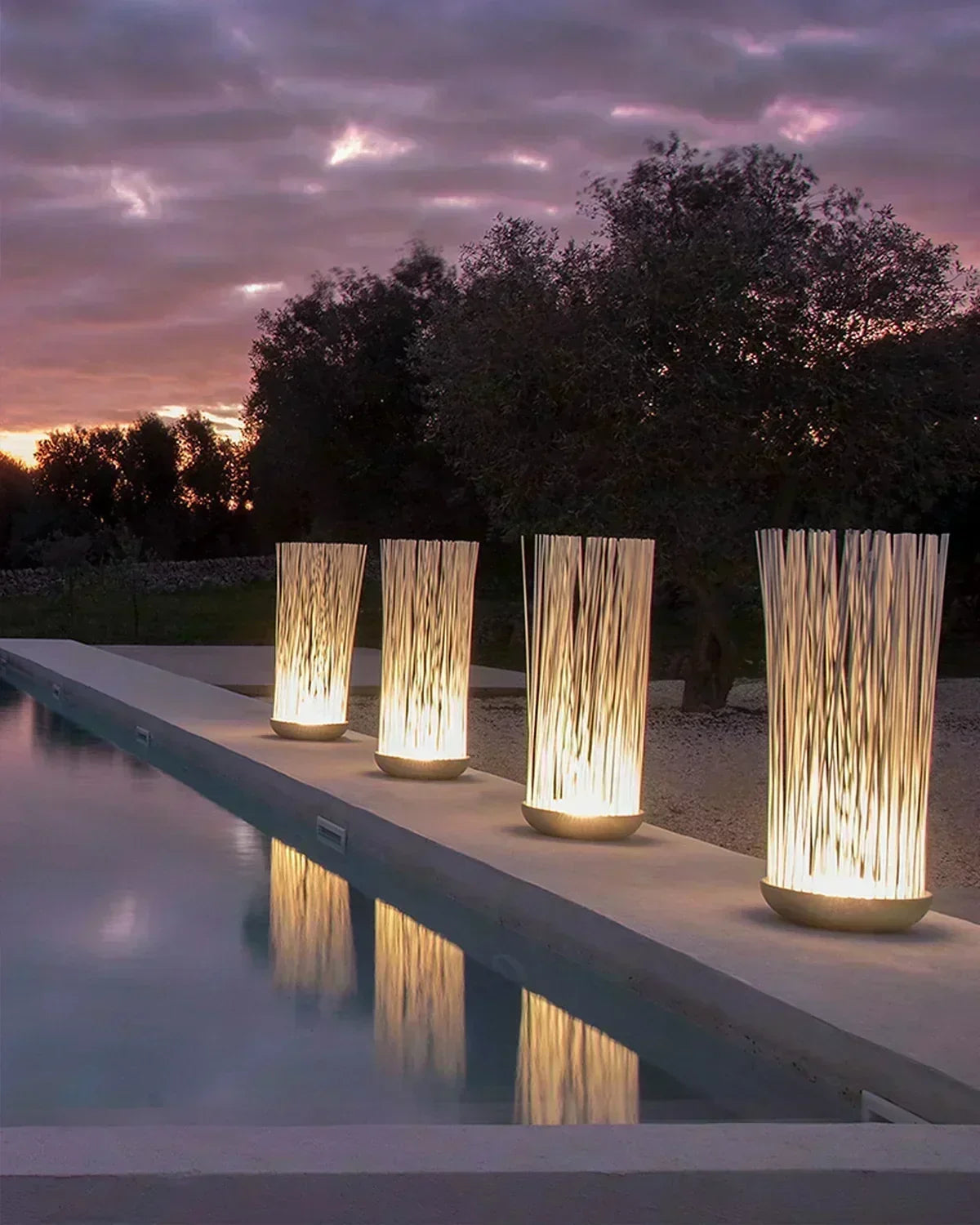
Pool areas are usually lit for function alone - with enough light to see the water, little else - but the surrounding space deserves the same warmth as any other entertaining area. Light positioned along the fence line or near a lounge or dining zone brings a layer of atmosphere. Low-level path or step lights are also a great addition, ticking off a practical need without glare.

Image: Ululi Ulula Outdoor Floor Lamp & Lateris Outdoor Wall Light
Water reflects and amplifies whatever light sits near it, so even a single well-placed wall light can do more for a pool area after dark than a run of floodlights ever will.
What's the right lighting for an alfresco dining table?
Wherever the outdoor table sits - full alfresco area, courtyard corner, or the end of a deck - it needs the same anchor in lighting as your indoor dining space. An outdoor-rated pendant hung above the table, low enough to pool warmth over the setting without glaring into anyone's eyes, is an excellent choice that adds considered styling.

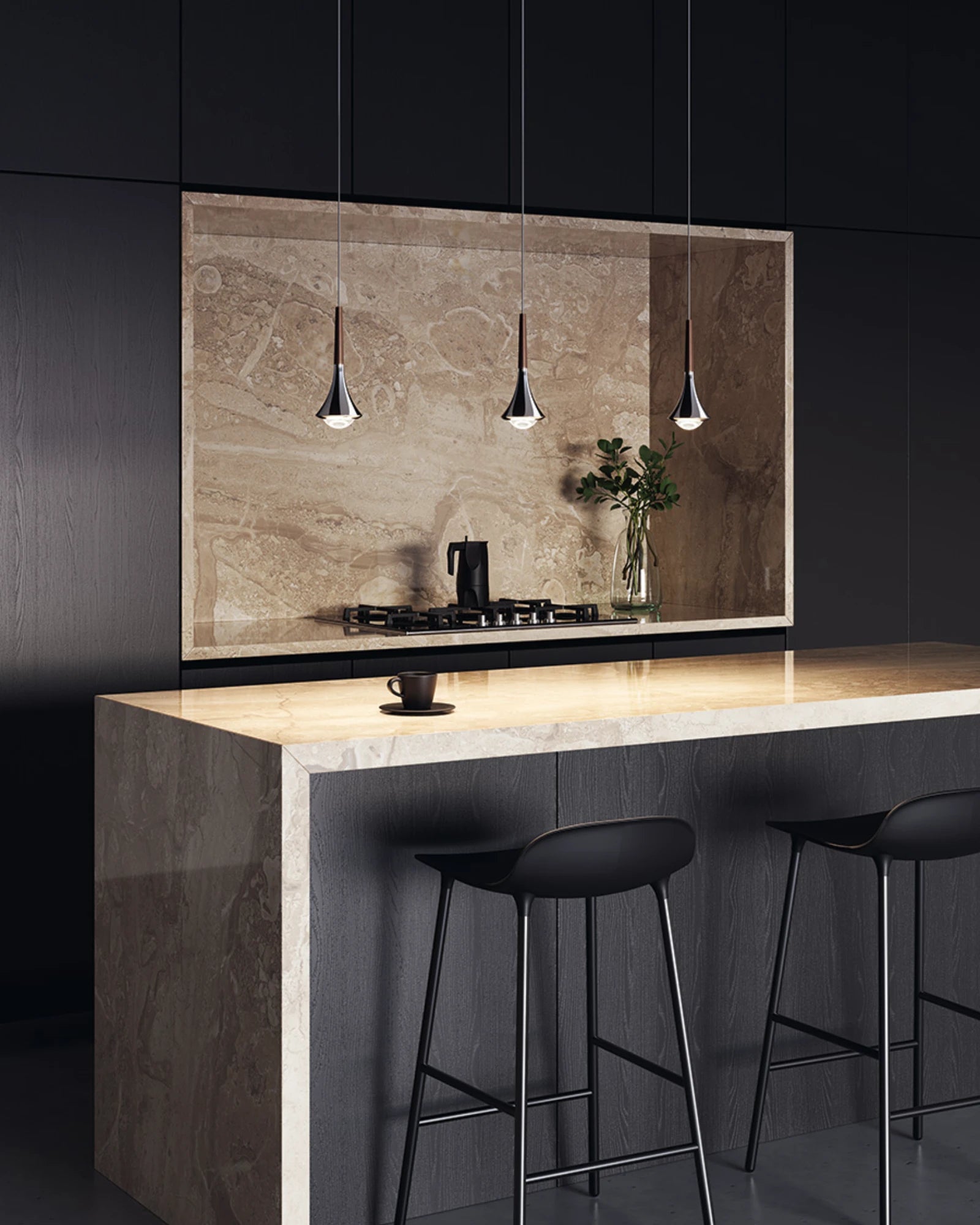
Image: Cordea Outdoor Pendant Light & Vandalia Pendant Light
Where a pendant is not practical - no overhead fixing point, an area too exposed for a hanging fitting - a pair of wall lights either side of the table is an excellent, styled solution.

Image: Sfera Curved Arm Wall Light & Aludra Double Wall Light
String lights along a pergola line or fence extend that warmth. For a light that can move wherever the evening ends up, a cordless portable lamp does the job.
The Kuro Portable Lamp by Astro is one we return to often - solar-powered and rechargeable, with a hidden LED that directs light downward rather than out, so it adds warmth without ever adding glare.

Candlelight still earns its place alongside all of it - on the table, along a step, grouped nearby - for the flicker no fixed fitting can replicate.
Does an outdoor pendant or wall light need an IP rating?
Yes. Every outdoor light needs to have an IP (Ingress Protection) rating, and it should be matched to the location of the light. A pendant or wall light under a pergola or covered alfresco area can generally work with a lower rating than one hanging fully in the open and exposed to direct rain.
The material matters too - solid brass and marine-grade stainless steel will hold up best over time, particularly near the coast, where salt air will corrode a lesser metal within a season or two. Powder-coated aluminium performs well inland provided the coating is genuinely exterior-rated, and any glass or polycarbonate diffuser is worth checking for UV stability, as the wrong material can fade, regardless of the initial price.
Letting the light fade gracefully
The best outdoor lighting is not at the one setting all evening. Early entertaining calls for a brighter, more functional glow; once dinner is done and conversation is what is left, lighting can be dimmed with mood.
This is the detail that separates a garden that happens to have some lights in it, from one that has actually been lit for entertaining - the ability to let the evening wind down visually as well as socially.

Image: Arne S Domus Pendant Light
None of this needs a full landscaping project. One well-chosen outdoor pendant or wall light, a run of string lights, and a few well-placed candles will do more for an evening outside than any amount of daylight ever could.
Questions we get about styling outdoor lights
Can I use an indoor pendant outside if it's under a covered area? Not recommended, even under cover. Indoor fittings aren't built to handle humidity, temperature swings or the occasional wind-blown rain the way an IP-rated outdoor fitting is, and the wiring and finish will degrade far faster than the price difference justifies. A covered area simply means you can use a lower IP-rated outdoor fitting rather than needing the highest rating available - it doesn't mean an indoor piece will do.
What IP rating do I actually need for my space? It comes down to how exposed the spot is, not how big it is. A pergola, covered alfresco area or protected balcony can generally work with a lower-rated fitting, while anything open to direct rain - an uncovered table, a pool edge, an exposed balcony - needs a higher rating.
Will my outdoor lights rust or corrode near the coast? Depends entirely on the material, not just the finish. Solid brass and marine-grade stainless steel are built for salt air and hold up for years; a lesser metal with a nice-looking coating can start corroding within a season. If you're within a few kilometres of the coast, it's worth asking specifically about the base material before choosing on looks alone.
Pendant or wall light - which one should I actually get? A pendant needs a solid overhead fixing point and works best where there's at least some cover. A wall light is the better call if there's no ceiling to hang from, if the area is fully exposed, or if you want light without running new wiring overhead. Most of our outdoor spaces end up using both - a pendant for the main anchor, wall lights to fill in the rest.
Do I need an electrician, or can I just plug something in outside? Any hardwired pendant or wall light needs a licensed electrician, particularly outdoors where safety standards are stricter. Portable, rechargeable pieces - like the Kuro Portable Lamp - are the exception, and are worth considering for exactly this reason if you're renting, or want lighting somewhere you can't easily run power.