
Woven Light: A Guide to Rattan Lighting
There is a particular quality to light that has passed through a woven surface. It arrives softened, broken into pattern, carrying the texture of the material with it. Glass diffuses. Metal directs. Rattan does something different - it filters light the way a tree canopy does, and the effect on a room is immediate. Everything relaxes.
This is why rattan lighting has never really left us. It moves in and out of fashion, but the appeal underneath is constant. In this guide, we look at where rattan lighting comes from, why it works the way it does, and how to choose the right woven piece for your space.
A short history of the weave
Rattan is a climbing palm, native to the tropical regions of Southeast Asia. It has been harvested and woven for centuries - into furniture, baskets, and eventually into lighting, as electrification spread through the early twentieth century and designers began looking for shades that could soften the harshness of the new incandescent bulb.
The material had its first great design moment in the mid-century period. European designers returning from travel through Asia and the Pacific brought woven forms into modernist interiors, where the contrast between clean architecture and handmade texture proved irresistible. It surfaced again in the 1970s, this time loose and bohemian. And it is with us now in a third form - more refined, more sculptural, sitting comfortably in contemporary Australian homes where indoor and outdoor life blur together.

That last point matters. Rattan suits the way Australians actually live. It belongs to a climate of open doors, filtered sun, and rooms that breathe. A woven pendant over a dining table here does not read as a trend. It reads as native.
Why rattan light feels different
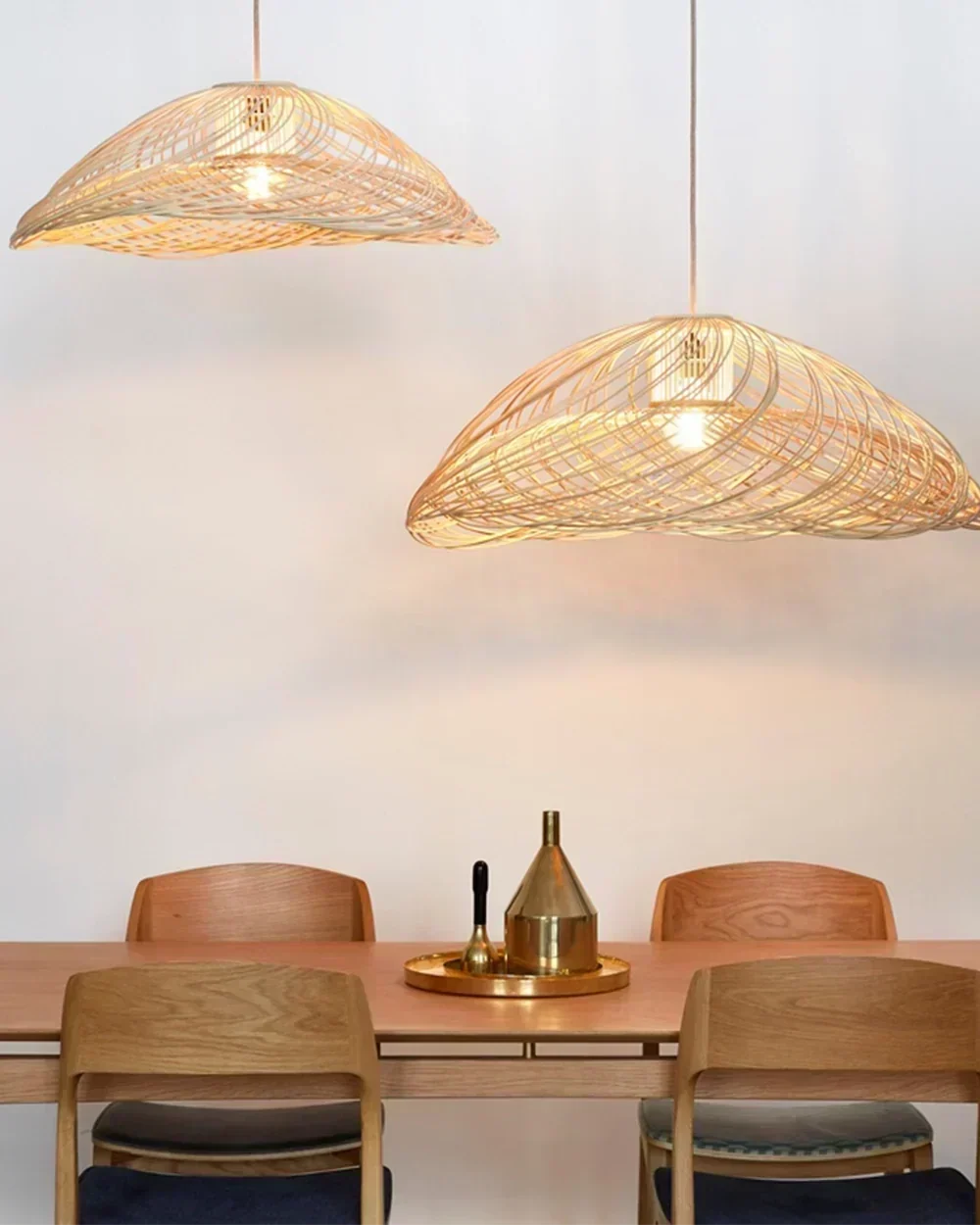
The open weave is the whole story. A solid shade throws light down and holds shadow above. A woven shade lets light escape in every direction, casting a soft lattice of pattern across walls and ceilings. The fixture stops being a single point of brightness and becomes part of the atmosphere of the room.
There is a practical dimension too. Rattan is light. A generously scaled woven pendant can hang where a glass or metal piece of the same volume would feel heavy, which is why rattan is so often the answer when a room needs a large statement without visual weight.
And because the material is natural, no two pieces are quite alike. The slight irregularities of the weave are not flaws. They are the point.
Choosing a silhouette
The shape of a woven pendant changes how it behaves in a room, so it is worth thinking about form before finish.
A dome is the most generous of the classic shapes. Our Natural Rattan Pendant Light - Dome has a wide, enveloping silhouette that creates a sense of shelter over a dining table or in an entryway, with the open weave letting light drift gently through.

Natural Rattan Pendant Light- Dome
A bowl does the opposite - it opens upward and outward, spreading light evenly across a space. The Natural Rattan Pendant Light - Bowl works beautifully over kitchen islands and dining settings, its wide silhouette balanced by a slender adjustable cable that keeps the whole composition feeling light.

Natural Rattan Pendant Light- Bowl
For rooms that want a little more structure, the Natural Rattan Pendant Light - Trumpet introduces a flared, architectural line while keeping the relaxed character of the material. And the Natural Rattan Pendant Light - Beehive is the most sculptural of the family - a ribbed, organic form with a matte gold base that reads as an object even when the light is off.

Natural Rattan Pendant Light - Trumpet
The coastal register
Rattan and the Australian coast have a long association, and some pieces lean into it deliberately. The Wentworth Rattan Pendant Light is handwoven and quietly classic - the kind of fixture that suits a beach house as easily as a city terrace. The Coco Pendant Light takes a more open approach, its airy weave casting patterned light across the room, while the Drift Pendant Light sits somewhere in between - relaxed, neutral, and versatile enough to move between contemporary and rustic settings.

Wentworth Rattan Pendant Light
For a piece that plays rattan against another material, the Barcelona Pendant Light pairs a woven outer framework with a soft ecru cotton shade. The cotton diffuses, the rattan patterns - the two working together to produce a light that is both even and textured.

Beyond the natural finish
Rattan does not have to mean beige. The Bahamas Pendant Light wraps a resin shade in a rattan cover and comes in natural, white wash, and black finishes - the black version in particular is a useful reminder that woven lighting can be graphic and contemporary rather than purely coastal.

And rattan need not stop at the back door. The Ralph Pendant Light, Italian designed and made, uses handwoven synthetic rattan rated for outdoor use - bringing the woven look to verandahs, covered terraces, and alfresco dining areas where natural fibres would not survive.

Styling woven light
A few principles hold across almost every space.
Give the weave something plain to sit against. Rattan is texture, and texture needs contrast - a painted ceiling, a rendered wall, a linen curtain. In a room already busy with pattern, a woven pendant can disappear.
Scale up rather than down. Because rattan carries so little visual weight, most rooms can take a larger piece than instinct suggests. A small woven pendant in a big room reads as an afterthought. A large one reads as intent.
Choose a warm bulb. The weave was made for warm light - somewhere around 2700K brings out the honey tones of the natural material and makes the cast patterns glow rather than glare.
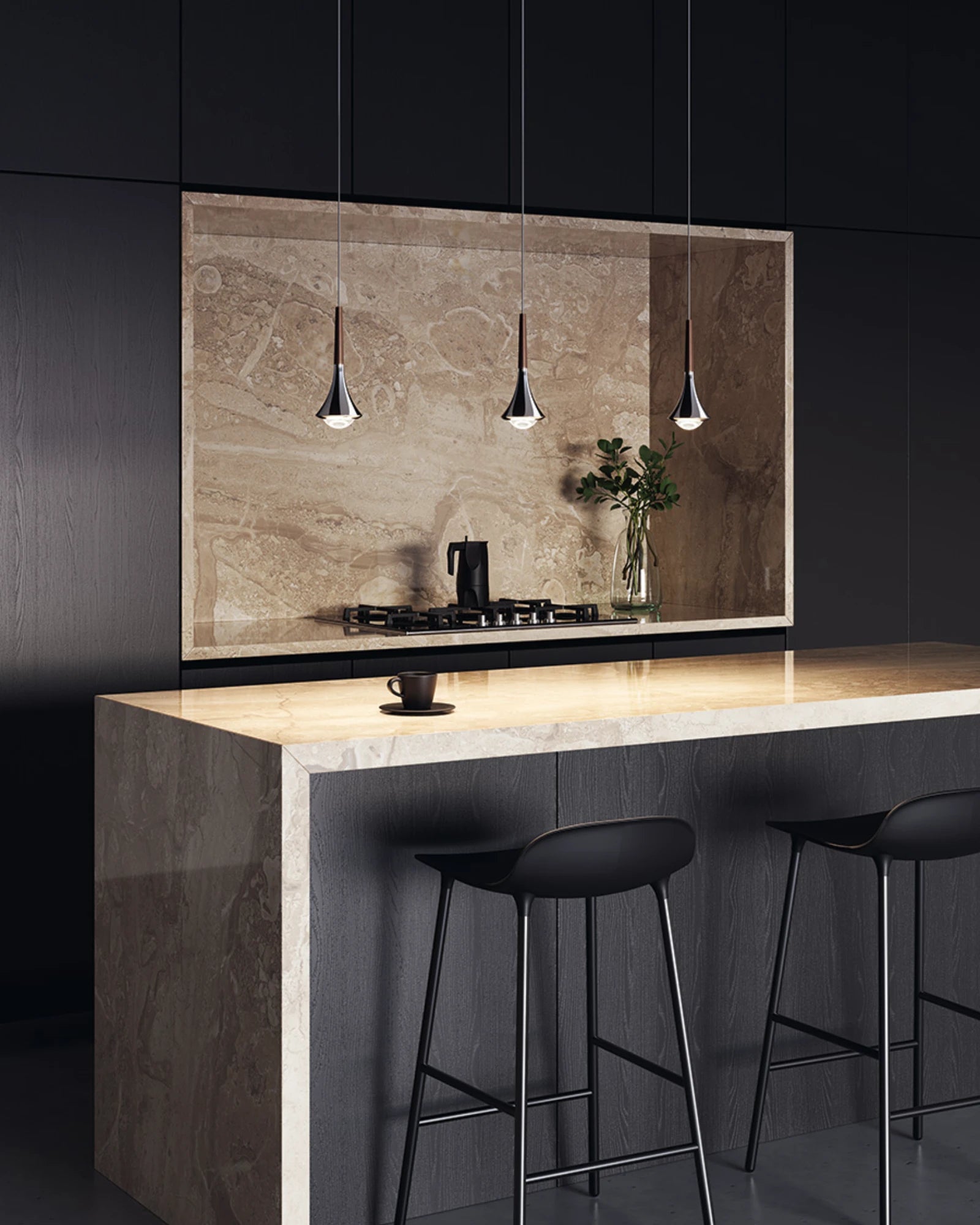
And finally, let it be the softener. Rattan is at its best when it is loosening a room that would otherwise feel hard - over a stone benchtop, beside dark timber joinery, within a very architectural space. The weave gives the eye somewhere gentle to land.
The enduring case for rattan
Materials come and go, but the ones that stay are the ones that answer something real. Rattan answers the desire for light that feels human - handmade, imperfect, warm. In a home, that is not a small thing. It is often the difference between a room that photographs well and a room that people want to stay in.
Explore our full range of woven and natural fibre lighting online, or visit the showroom in Surry Hills to see how the light falls through the weave in person.