
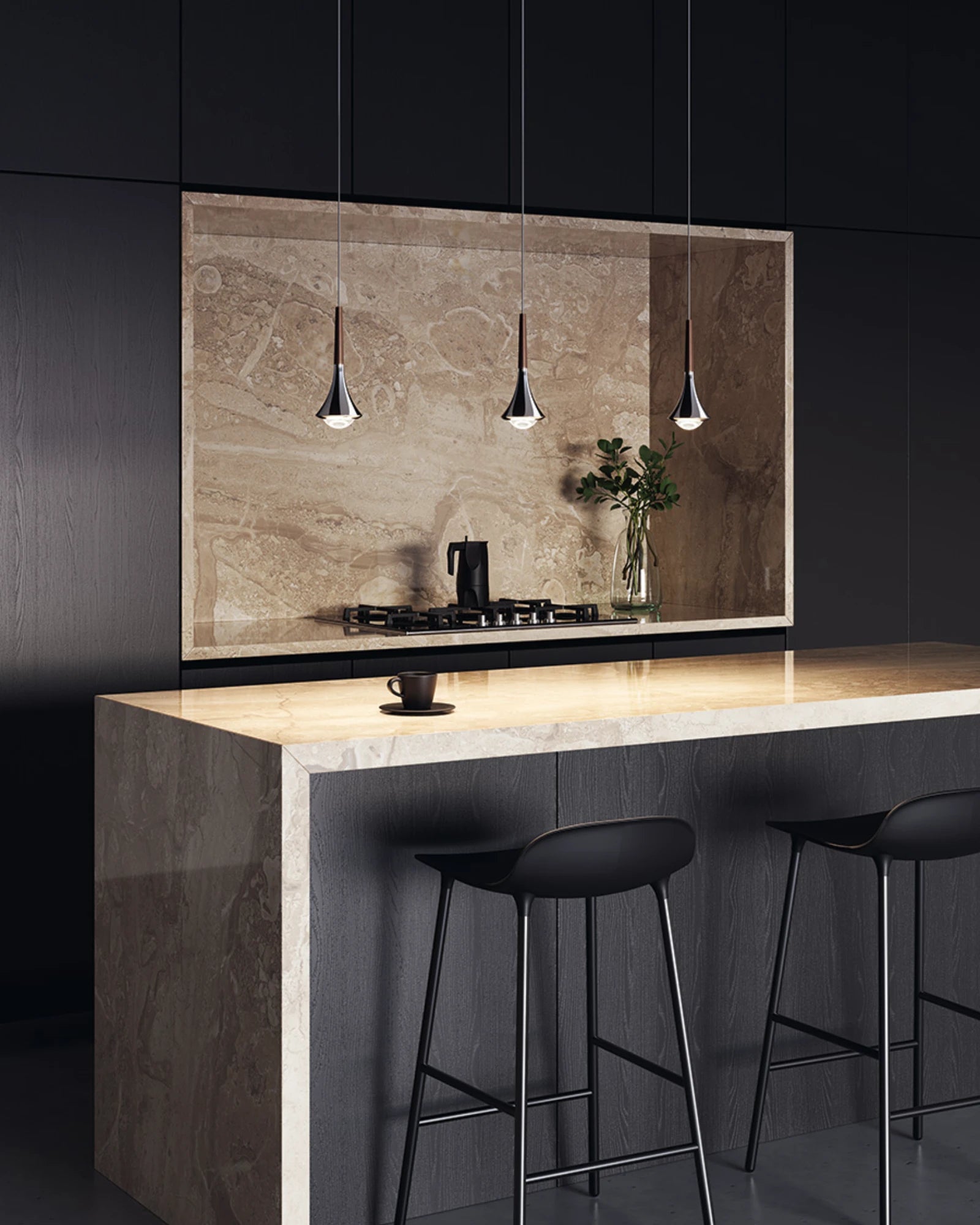
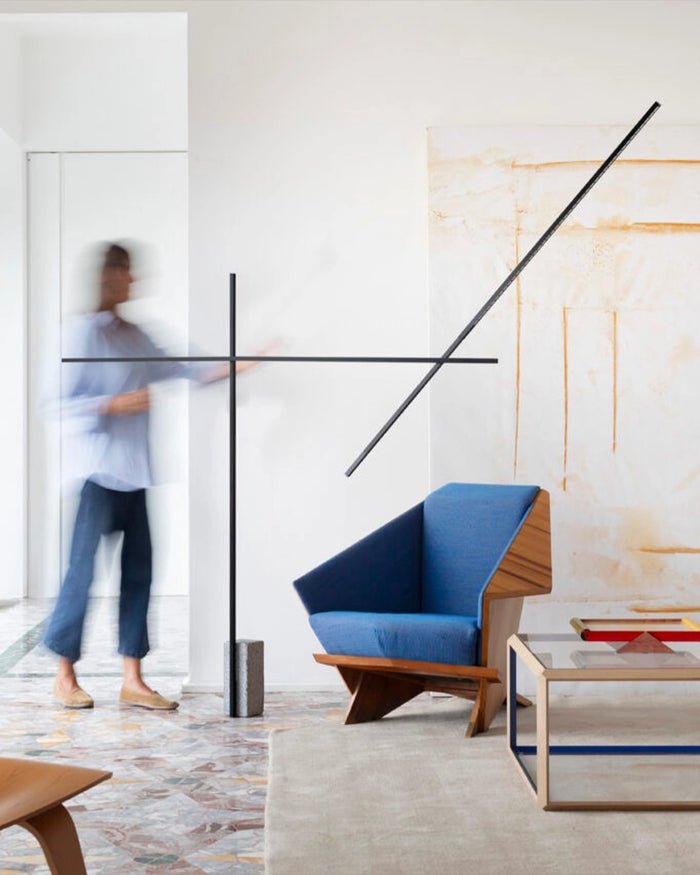
In our first instalment of this series, we explored what makes light a sculpture: pieces designed to be admired as much as switched on. Since then, sculptural lighting has moved from the gallery wall to the heart of the home. Across 2026, designers have been treating the light fitting as the room's main character, the one piece that tells the story of the space, day or night.
But "sculptural" isn't one look. A hand-formed stone lamp belongs in a very different room to a polished, branching chandelier. So rather than asking which sculptural light is best, we think the better question is: which sculpture suits the way you live?
Below, we've paired pieces from the Nook Collection with five of the interior styles our clients ask about most, followed by the practical questions we help people work through in the showroom every week.
Refined Mediterranean: earthy, sun-warmed and hand-made
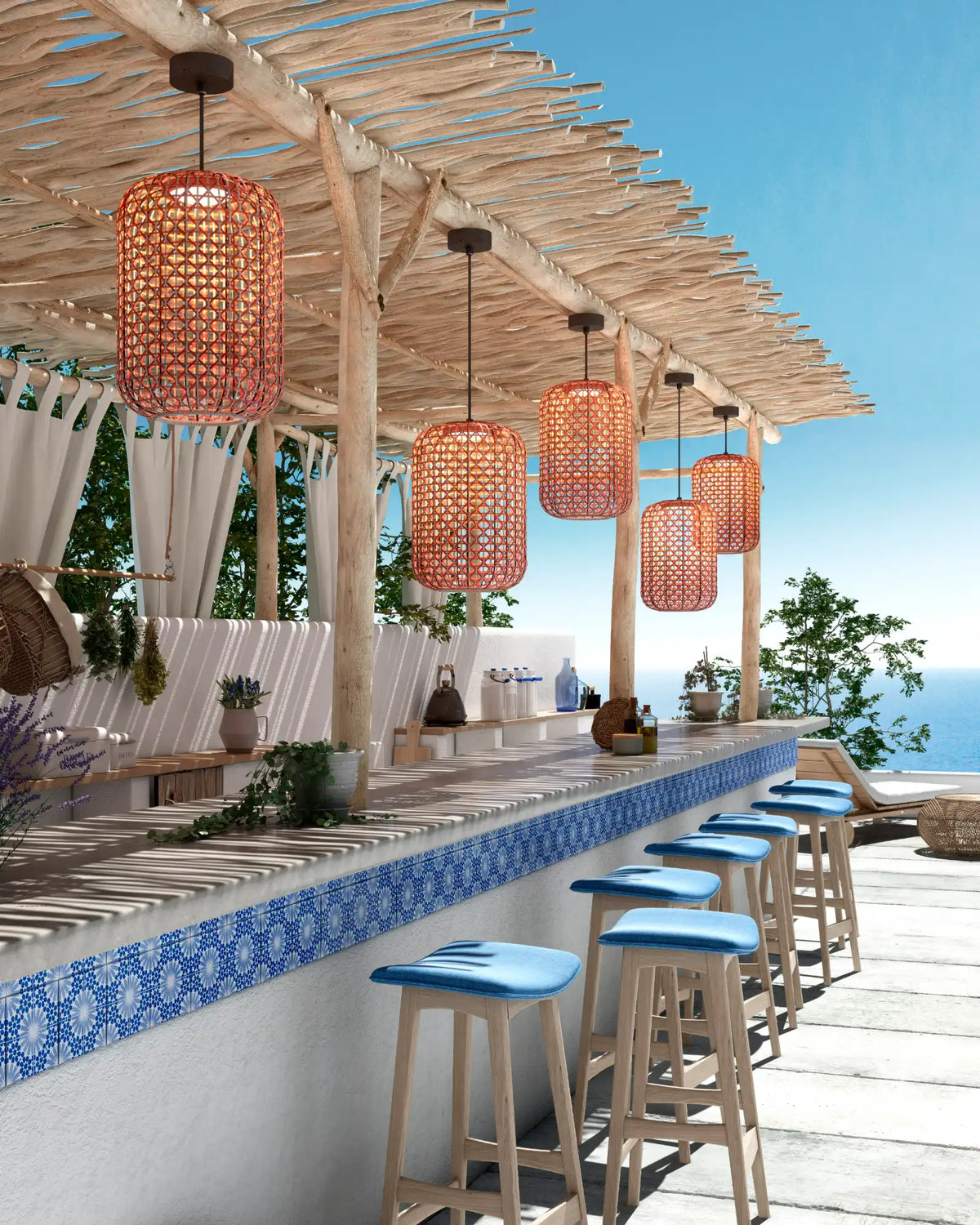
Today's Mediterranean interior has shed its blue-and-white clichés. It's built on limewash, terracotta, travertine, timber and hand-made ceramics, with arches and soft curves doing the architectural talking. It suits the Australian way of living, too: long summers, open doors and rooms that flow into the garden.
Sculptural lighting for this look should feel as though it was shaped by hand from the earth itself.
- Dolmen Pendant, Table Lamp and Floor Lamp: monolithic and stone-like, the Dolmen family reads like a carved object even when unlit. Hang the pendants in a row over a stone island, or let the floor lamp stand beside a limewashed wall like a piece of ancient architecture.

-
La Lampe B Table Lamp: soft, cupped forms that wash warm light down the wall. A natural fit for a niche, console or bedside.

- Oiphorique Still Floor Lamp: stacked organic volumes that glow like lanterns on a terrace at dusk.

- Horizon II Pendant Light: a delicate blend of glass and brass, inspired by the meeting of the sea and sky that brings an airy sculptural quality to open spaces.

Styling tip: keep globes warm (around 2700K) and put everything on a dimmer. The goal is that golden-hour glow, even on a winter evening.
Art Deco and Modern Classic: glamour, geometry and glass
Art Deco is enjoying a quieter, more grown-up revival: fewer mirrored surfaces, more craftsmanship. Think fluted details, polished and textured metals, coloured glass and a strong sense of rhythm and repetition. Sculptural lighting here should feel like jewellery for the room.
- Fronda Pendant and Fronda Ceiling Light: fine branching arms tipped with points of light, a modern take on the classic chandelier. Beautiful in a formal dining room or a heritage terrace with ornate ceilings.

- Drop 9 Pendant Light: cascading rings that create a luminous, layered silhouette over a dining table.

- Duo Wall Light: two amber glass spheres stacked like a piece of 1970s-meets-Deco jewellery. Lovely in pairs flanking a mirror or bed.

- Vintage Wall Light: a tinted glass globe that throws a radiant halo onto the wall behind it.

- Alchemy Pendant Light and Eon Sans S3 Pendant Light: glass and metal combined with a sense of precision and polish.

Styling tip: Deco loves symmetry. Use wall lights in matching pairs and centre pendants precisely on the table or console below.
Japandi and Soft Minimalism: calm, crafted and quietly sculptural
Where Japanese restraint meets Scandinavian warmth, sculptural lighting should never shout. It should feel like a single, perfect brushstroke. Look for natural materials, honest craft and forms that soften the light rather than project it.
- Tatsuno-Otoshigo Pendant Light: crinkled, paper-like forms that diffuse light like a lantern. Striking in a double-height space or stairwell.

- Diva Pendant Light & Diva Floor Lamp: ribbed timber in a tall, graceful silhouette, as much a piece of furniture as a light.

- Nudge Table Lamp and Nudge Wall Light: a glowing orb framed by dark metal, pared back to the essentials.

-
Split Round and Split Long Wall Lights: soft wall-washing forms that turn a bare wall into an artwork.

Styling tip: in minimal rooms, one sculptural piece is enough. Let everything else (downlights, track, cove lighting) stay quiet and architectural.
Organic and Quiet Luxury: stone, glass and texture
If there's one material having a moment in 2026, it's alabaster, and more broadly any material that glows from within. This look is for people who want their home to feel tactile, layered and collected over time, without anything feeling showy.
- Babel Alabaster Table Lamp: the natural veining of the stone comes alive when lit, so every lamp is slightly different.

- Crackle S1, Crackle S4 and Crackle Large Wall Light: crackled glass that scatters light into delicate, textured patterns. Hang a cluster at staggered heights for an installation feel.

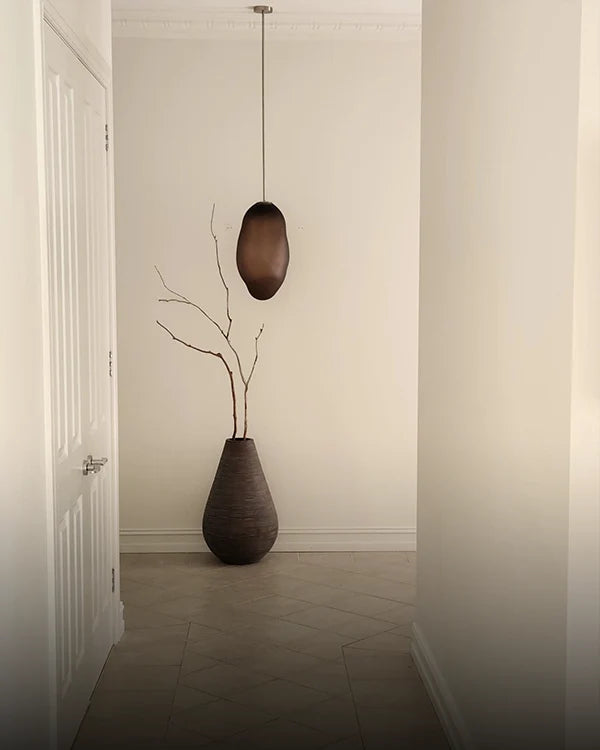
- Cloud XL Pendant Light: a soft, organic form suspended like a seed pod, particularly beautiful in a hallway or entry.

- Carst Linear Pendant Light: a rugged, rock-like texture reimagined as a linear light, ideal over a dining table or island.

Styling tip: pair textured lights with textured finishes (bouclé, raw linen, honed stone) so the light has something to play against.
Playful and Collected: for the design lover
Some homes are built around a collection: art, vintage furniture, books, objects gathered from travel. Here, sculptural lighting can be witty, bold and conversation-starting.
- Shogun Table Lamp: a graphic, striped icon of postmodern design that works like a small sculpture on a desk or sideboard.

- Ti Vedo Table Lamp: glowing owls that bring humour to a reading nook, study or child's room.

- Sherwood and Robin Pendant Light: a whimsical pendant for anyone who loves storytelling in design.

- Gweilo Han GR Floor Lamp: a flowing, hand-moulded form that feels like a gallery installation.

-
Tau Table Lamp: angular and architectural, a strong silhouette for a moody corner.

Styling tip: give a statement piece breathing room. Clear the surface around a sculptural table lamp so it reads as art, not clutter.
Taking the sculpture outdoors
With spring here and entertaining season ahead, don't stop at the back door. Outdoor sculptural lighting turns a garden into a gallery after dark.
- Ikonika Outdoor Floor Lamp: a tall woven silhouette that frames a view.

-
Don't Touch Outdoor Floor Lamp: sculptural forms that glow among plants like garden art.

- Minuit Spike Light: small glowing spheres that float through garden beds.

- Plancton Outdoor Pendant Light and Moby Dick Outdoor Pendant Light: generous forms for pergolas and alfresco dining.

For more on lighting outdoor dining, read our guide to lighting alfresco dining for hospitality.
What to think about before you buy
Falling in love with a sculptural light is the easy part. Here are the questions we help clients work through before they commit.
1. Does it look good switched off? A true sculptural light works 24 hours a day. Most of the time it's off, so judge it as an object in daylight as well as a glow at night.
2. Scale it to the furniture, not just the room. Over a dining table, a good starting point is a fixture roughly one-half to two-thirds the width of the table. In an entry or void, a light that's too small doesn't look modest, it looks unfinished. When in doubt in a large or double-height space, go bigger.
3. Think about visual weight, not just size. An open, glass or woven form can be large yet feel light; a solid stone or metal piece carries more presence at a smaller size. Choose based on how much "weight" the room can hold.
4. Mock it up. Cut the silhouette out of cardboard or mark it with painter's tape on the ceiling or table. It's the simplest way to check scale before you buy.
5. Choose warm light and a dimmer. Sculptural lighting is about mood, shadow and glow. Warm globes (2700K–3000K) and dimming let the piece shift from functional to atmospheric.
6. Let one piece lead. A sculptural light shouldn't have to do all the work. Layer it with quieter downlights, wall washers or lamps, and let the statement piece be the hero.
7. Connect it to the room. A good rule of thumb is that your sculptural light should share at least two things with the space around it, such as a finish, material, colour or era, so it feels chosen rather than dropped in.
8. Check the timing. Many designer pieces are made to order. If you're working to a build or renovation deadline, browse our Designer on Demand range, ready to ship in 4–6 weeks.
Find your sculpture
Whether your home leans Mediterranean, Deco, Japandi or somewhere wonderfully in between, there's a piece that will feel like it was made for it. Explore our full Sculptural Lighting collection, or book a design consultation and see these pieces in person at The Nook Showroom.
After all, it's not just a light. It's the piece that makes the room yours.